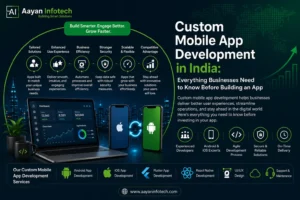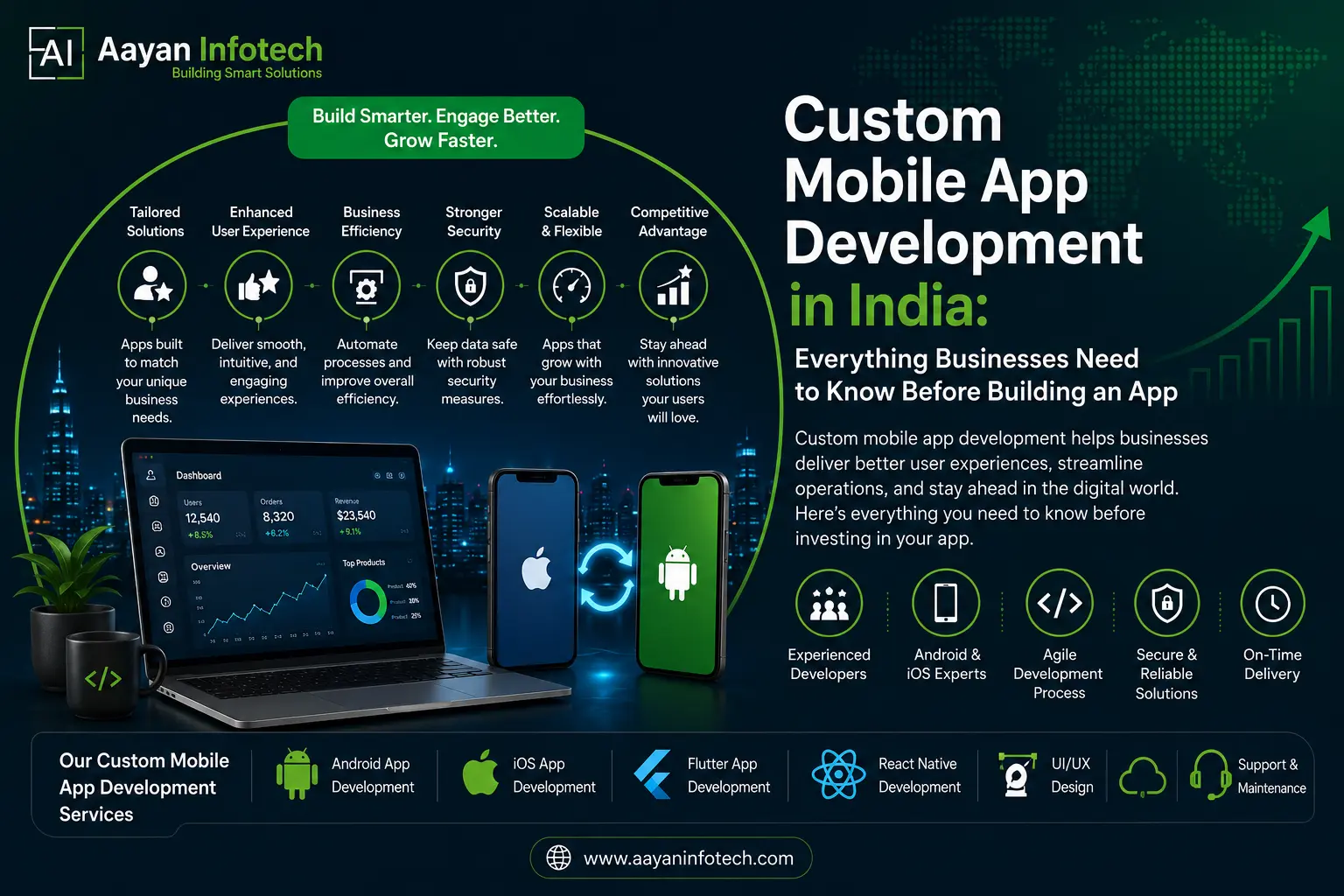
Mobile applications have become an important part of modern business strategies. Customers today expect faster services, personalized experiences, and easy access to products or services through smartphones. Whether it is online shopping, banking, healthcare, education, or business management, mobile apps have changed the way companies interact with their customers.
Custom Mobile App Development in India helps businesses create applications according to their specific requirements, target audience, and operational goals. Unlike ready-made solutions, custom applications are designed from the ground up to solve unique business challenges and provide better flexibility.
India has become a leading technology destination for mobile application development because of its skilled developers, advanced technology ecosystem, and cost-effective solutions. Startups, small businesses, and large enterprises are increasingly adopting customized mobile apps to improve customer engagement, automate processes, and achieve digital growth.
A professional development partner like Aayan Infotech helps businesses plan, design, and develop scalable mobile applications that support long-term success.
Custom mobile app development is the process of creating a mobile application specifically designed for a particular business, organization, or user group.
Unlike standard applications that provide limited features, custom apps are built according to specific requirements. Businesses can decide:
For example, an eCommerce business may require product management, payment integration, order tracking, and customer loyalty features. A healthcare organization may need appointment booking, patient records, and online consultation features.
A customized application ensures that businesses receive a solution that matches their workflow instead of adjusting their operations according to a generic platform.

The growth of smartphone users and digital services has created new opportunities for businesses across India. Customers now prefer using mobile applications because they offer convenience, speed, and personalized services.
Modern customers want instant access to information and services. A mobile application allows businesses to provide:
Companies that provide smooth digital experiences are more likely to build stronger customer relationships.
Businesses across industries are adopting mobile solutions to stay competitive. From startups to established companies, organizations are using mobile apps to improve visibility and create better customer experiences.
Industries using custom mobile applications include:
One of the biggest advantages of custom applications is that they are designed according to business needs.
A company can include features that directly support its operations, such as:
This improves efficiency and helps businesses manage their processes more effectively.
User experience plays an important role in application success. Custom apps allow businesses to design interfaces based on customer behavior and preferences.
A well-designed application provides:
Better usability increases customer satisfaction and improves retention.
Security is a major concern for businesses handling customer and financial data. Custom mobile applications allow developers to implement advanced security measures according to business requirements.
Security features may include:
This makes customized applications more reliable for businesses dealing with sensitive information.
Businesses continue to change as they grow. A custom mobile application can be expanded with new features and technologies whenever required.
Companies can add:
This makes the application a long-term digital investment.
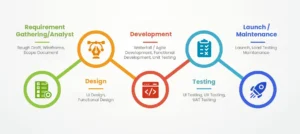
Developing a successful application requires proper planning and execution. A professional mobile app development process generally includes the following stages.
The first step is understanding the business objectives and user requirements.
During this phase, developers analyze:
Proper planning reduces development risks and creates a clear roadmap.
The design phase focuses on creating an attractive and user-friendly application interface.
Designers work on:
A good UI/UX design ensures users can easily navigate the application.
After finalizing the design, developers begin coding the application.
Businesses can choose different development approaches:
Native apps are developed specifically for Android or iOS platforms.
Advantages:
Technologies like Flutter and React Native allow developers to create applications that work across multiple platforms.
Benefits include:
After successful testing, the application is published on app stores.
However, development does not end after launch. Regular maintenance helps businesses:
Technology selection depends on business goals, budget, and application requirements.
Flutter is a popular framework used for building cross-platform mobile applications.
Benefits include:
React Native is another popular framework for creating mobile applications with strong performance.
It is commonly used by businesses that want flexible and scalable mobile solutions.
Native Android and iOS development provide platform-specific performance and advanced device capabilities.
Android applications are commonly developed using Kotlin, while iOS applications use Swift.
A successful business application should focus on customer needs and business objectives.
Important features include:
Secure account creation helps businesses provide personalized services.
Notifications allow businesses to share updates, offers, and important information.
Secure payment options improve customer convenience.
Advanced search helps users quickly find products or services.
Business analytics help companies understand:
Chat support and help features improve customer trust.

The cost of building a mobile application depends on multiple factors.
Simple applications require fewer resources, while advanced enterprise apps need more planning and development time.
Additional features such as:
can increase development requirements.
Developing for Android, iOS, or multiple platforms affects the overall investment.
Custom UI/UX design requires additional research and development efforts.
Without proper planning, businesses may face delays and increased development costs.
Understanding customer needs is important for creating a successful application.
Security should be considered from the beginning rather than added later.
Regular updates are necessary to keep applications competitive.
Selecting the right technology partner can significantly impact application success.
Businesses should consider:
Check whether the company has experience with:
Reviewing portfolios helps understand development quality and industry experience.
A reliable company should provide transparent communication throughout development.
Post-launch support is important for long-term application performance.
The mobile app industry continues to evolve with new technologies.
Important future trends include:
Businesses adopting these technologies can create better customer experiences and improve operational efficiency.
The demand for Custom Mobile App Development in India is increasing as businesses look for better ways to connect with customers and improve their digital operations. A customized application allows companies to create unique solutions that match their business goals, improve efficiency, and support future growth.
From planning and design to development and maintenance, every stage plays an important role in creating a successful mobile application. Choosing an experienced technology partner helps businesses build secure, scalable, and user-friendly mobile solutions.
Aayan Infotech helps businesses transform ideas into powerful mobile applications using modern technologies and industry-focused development strategies.
If your business is planning to build a custom mobile application, connect with Aayan Infotech to discuss your requirements and create a solution designed for long-term success.
Custom mobile app development in India refers to creating business-specific mobile applications designed according to unique requirements, customer needs, and operational goals.
Custom apps provide better flexibility, security, scalability, and user experience compared to standard solutions.
Development time depends on application complexity, features, design requirements, and testing processes.
The right choice depends on business requirements. Flutter is useful for cross-platform development, while native apps provide platform-specific performance.
The cost depends on features, design complexity, platform selection, and development requirements.