Long before the first chip was forged, she dreamed of a world woven by logic. The enchantress of numbers who saw the future in the gears.
Explore Biography →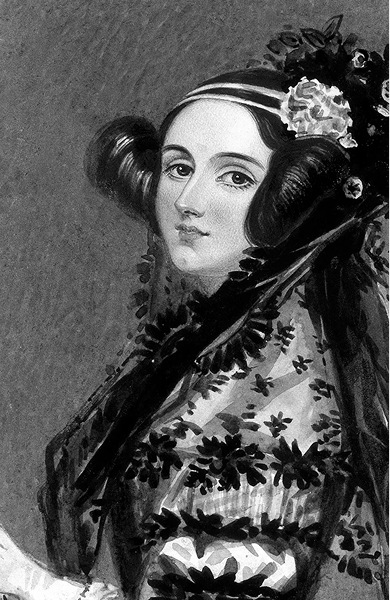
While her contemporaries, including Charles Babbage, focused on the crunching of numbers, Ada Lovelace grasped the true potential of the Analytical Engine. She imagined not only rows of correct musical notes — could be translated into digital form and manipulated by a machine.
In her translation of an article by Luigi Menabrea, she added her own extensive notes, labelled A through G. Note G contained what is now considered the first computer program — an algorithm designed to calculate Bernoulli numbers using Babbage’s machine.
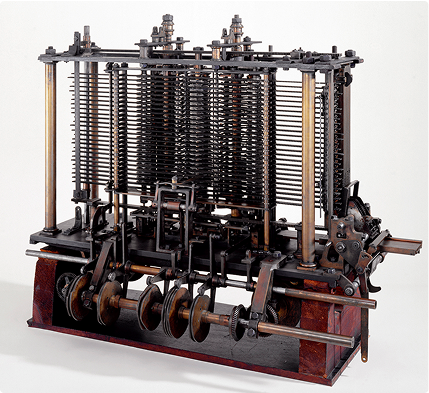
She didn’t just translate; she created. Her ‘Note G’ detailed a stepwise sequence of operations for solving a specific mathematical problem, making her the first person to publish a complex program.
Lovelace described her approach as “poetical science,” a methodology that allowed her to ask questions about the Analytical Engine that pure mathematicians like Babbage never considered.
While others saw a calculator, she saw a universal machine. She predicted that computers would one day compose music, produce graphics, and be used for scientific work.