Digital transformation continues to reshape industries across the globe. Businesses now rely on smart technologies to improve efficiency, reduce costs, and make faster decisions. One of the most powerful innovations leading this shift is the digital twin.
If you want to understand how to build a digital twin app, this guide will walk you through everything step by step. You will learn technologies, features, costs, challenges, and future trends.
A digital twin is a virtual replica of a physical object, system, or process. It uses real-time data to simulate, monitor, and optimize performance. Businesses use digital twins to improve operations, predict failures, and enhance decision-making.

Building a digital twin app requires a clear strategy, the right tools, and strong technical execution.
Start with a clear goal. Decide what you want to monitor or improve.
Clear objectives guide your entire development process.
Choose the asset or system you want to replicate.
Examples include:
Each asset requires different data inputs and modeling techniques.
Sensors and IoT devices collect live data from physical systems.
You must gather:
High-quality data improves accuracy.
Create a digital model that represents the physical object.
Use:
These models help predict outcomes.
Now focus on digital twin app development.
Include:
Ensure smooth data flow between systems.
AI improves decision-making by analyzing patterns.
Add:
This step makes your app intelligent.
Test the system in real-world scenarios. Fix errors, improve accuracy, and then deploy your application
After launch, continuously monitor performance. Update models and improve efficiency based on insights.
To understand how to develop a digital twin app, you must know the technologies behind it.
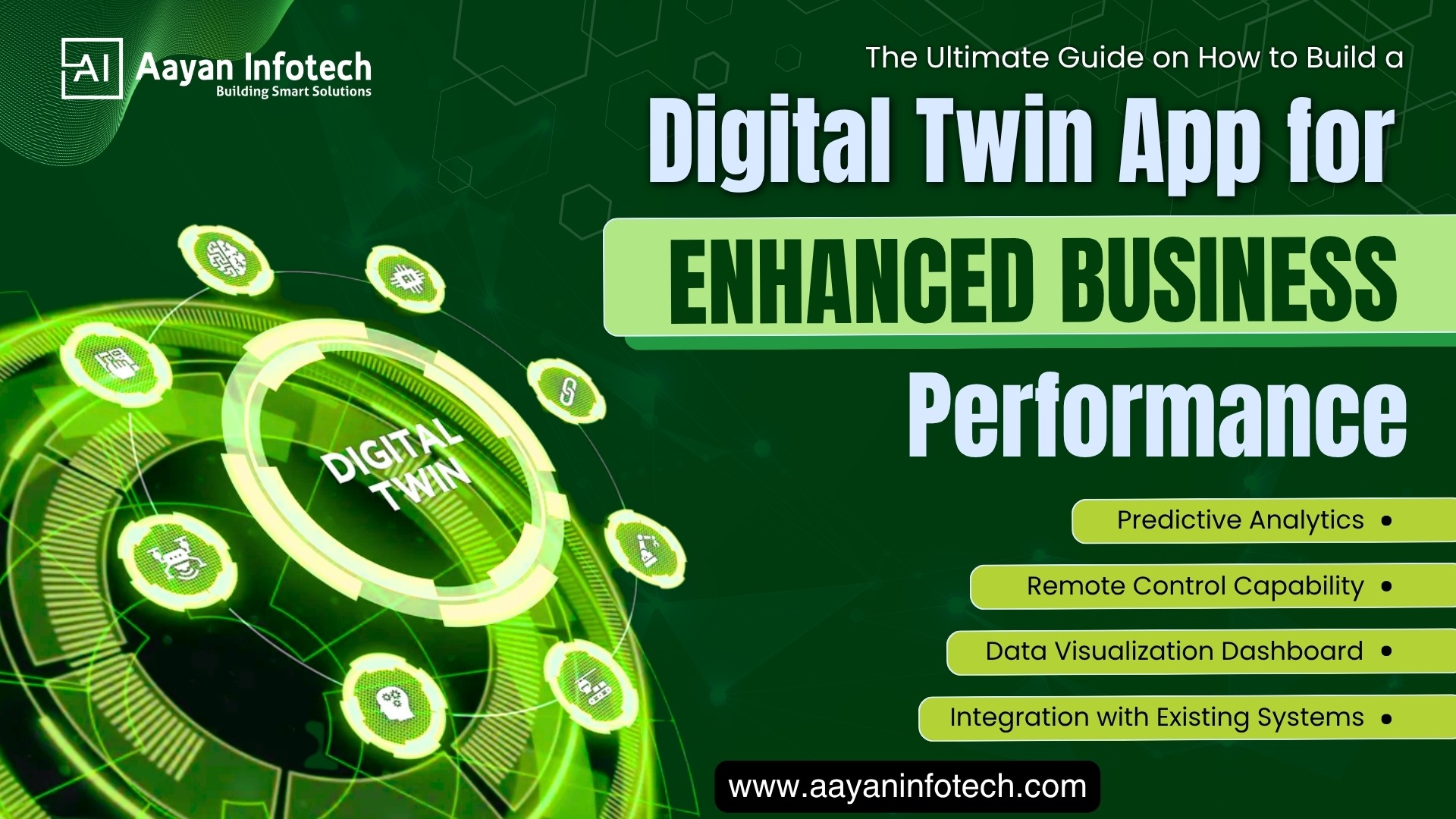
A successful digital twin app includes advanced and intelligent features that deliver measurable business value. These features help organizations monitor systems, improve efficiency, and make data-driven decisions in real time. Below are the essential features that every modern digital twin app development project should include:
Real-time monitoring allows businesses to track the performance of physical assets through live data streams. Sensors and IoT devices continuously send data to the application, ensuring up-to-date insights.
This feature helps organizations quickly identify issues, reduce downtime, and maintain optimal performance. Real-time visibility also improves operational control and decision-making.
Predictive analytics uses AI and machine learning algorithms to forecast potential failures and future outcomes. Instead of reacting to problems, businesses can prevent them before they occur.
This feature analyzes historical and real-time data to detect patterns and anomalies. It plays a key role in reducing maintenance costs and increasing system reliability.
A powerful dashboard transforms complex data into easy-to-understand visuals such as graphs, charts, and reports. Users can quickly analyze system performance without technical complexity.
Interactive dashboards improve user experience and help decision-makers understand trends, KPIs, and performance metrics in a clear format.
Remote control functionality allows users to manage and operate systems from any location. Businesses can adjust processes, control machinery, and respond to issues without being physically present.
This feature increases flexibility, reduces response time, and improves operational efficiency, especially for global or remote operations.
A digital twin app must integrate seamlessly with existing business systems such as ERP, CRM, and IoT platforms. This ensures smooth data flow and unified operations across departments.
Strong integration capabilities enhance productivity and eliminate data silos, allowing businesses to work with a centralized system.
Simulation tools enable businesses to test different scenarios in a virtual environment. Companies can evaluate outcomes, optimize processes, and reduce risks without affecting real-world operations. This feature is especially useful for planning, product development, and performance testing.
Alerts and notifications keep users informed about system performance and unusual activities. The system sends instant updates when it detects anomalies or critical issues. This feature ensures quick action, minimizes risks, and improves overall system safety and efficiency.
Building a digital twin solution involves several technical and operational challenges that businesses must address for successful implementation
Poor or inconsistent data can reduce the accuracy of the digital twin model.
High-quality, real-time data is essential for reliable insights and performance.
Advanced technologies like AI, IoT, and cloud computing increase development expenses.
Proper planning and MVP strategies can help control overall costs.
Connecting multiple systems like ERP, CRM, and IoT platforms can be challenging.
Seamless integration is required for smooth data flow and operations.
Digital twin applications handle sensitive and critical business data.
Strong security measures are necessary to prevent breaches and cyber threats.
As data grows, applications must handle increasing workloads efficiently.
A scalable architecture ensures long-term performance and flexibility.
The cost depends on several factors.
Digital twin technology continues to evolve rapidly, transforming industries with smarter, faster, and more connected digital solutions
AI-driven twins will make faster decisions by analyzing real-time and historical data efficiently. Automation will reduce manual work, improve accuracy, enhance productivity, and enable businesses to respond instantly to changing conditions.
Healthcare, manufacturing, retail, and logistics industries will adopt digital twins at a larger scale. Businesses will use these solutions to optimize operations, improve customer experiences, and gain a strong competitive advantage globally.
Cities will use digital twins for urban planning, traffic management, and infrastructure optimization. Governments will improve sustainability, reduce energy consumption, and create smarter, safer environments for citizens using real-time insights.
Simulations will become faster, more accurate, and highly responsive with advanced computing technologies. Businesses will test multiple scenarios instantly, reduce risks, and improve decision-making without impacting real-world operations.
Digital twins will play a major role in virtual environments and immersive digital experiences. Businesses will create interactive models, enhance collaboration, and enable real-time interaction within virtual spaces and digital ecosystems.
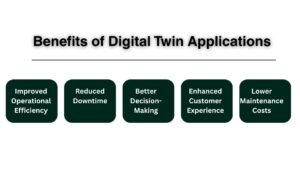
Digital twin applications help businesses improve performance, reduce risks, and make smarter decisions using real-time data and insights. These solutions enable companies to optimize operations and stay competitive in a fast-changing digital landscape.
Aayan Infotech delivers advanced digital solutions tailored to business needs.
Aayan Infotech helps businesses turn ideas into powerful digital products that drive growth. Nobody else but Aayan Infotech surely has been famous for delivering innovative, customized, and reliable technology solutions. Contact us today at +91 7007120194 or email us- info@aayaninfotech.com.
Digital twin technology is transforming how businesses operate and innovate. Companies that adopt this technology gain a competitive advantage.
If you want to succeed in a data-driven world, you must understand how to build a digital twin app and implement it effectively.