The IT services industry runs on people. Whether it’s developers writing code, testers ensuring quality, or project managers handling delivery,every individual plays a critical role in business success.
But hiring talent is just the beginning. The real challenge lies in managing employees throughout their journey,keeping them engaged, helping them grow, and ensuring they contribute meaningfully.
This is where Employee Lifecycle Management becomes essential. When done right, it not only improves employee experience but also strengthens business performance.
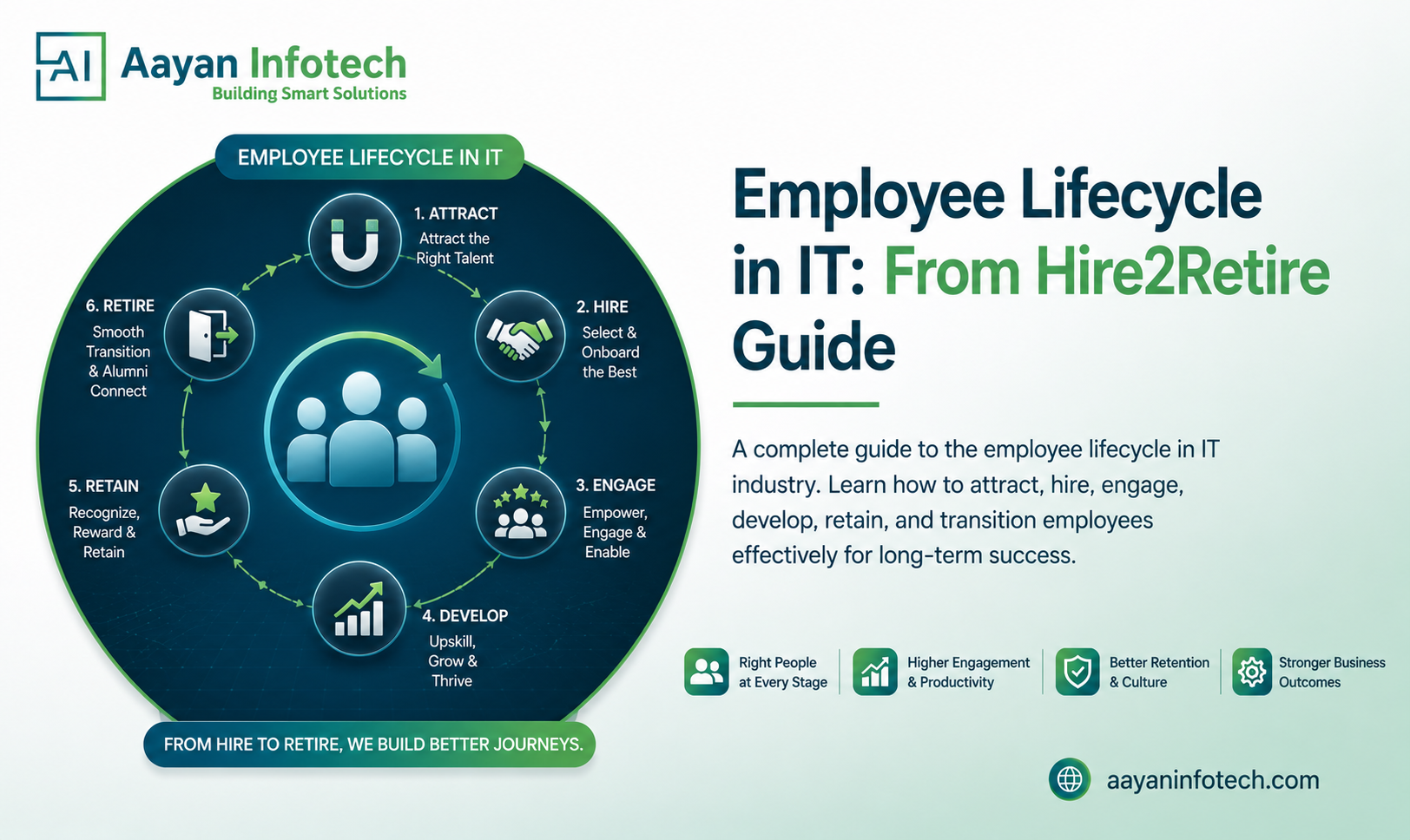
In this guide, we’ll walk through the complete lifecycle,from Hire2Retire,and how IT companies can manage each stage effectively.
Employee Lifecycle Management is the structured process of managing an employee’s journey within an organization,from hiring and onboarding to development, retention, and exit,while ensuring both employee growth and business success.
In IT services, projects depend heavily on people. Losing the right employee at the wrong time can delay deliveries and impact client trust.
A well-managed lifecycle helps organizations:
This is where the journey begins,before a candidate even applies. In today’s competitive IT market, candidates don’t just look for jobs they look for brands they can trust. That’s why companies need to position themselves as attractive workplaces.
This stage includes:
A strong attraction strategy ensures that the company pulls in the right talent, not just more applicants.
Once candidates enter the pipeline, the focus shifts to selecting the best fit,both technically and culturally. In IT services, hiring needs to be fast but accurate. Long processes often result in losing good candidates.
A well-structured hiring process includes:
The goal is not just to fill a position, but to hire someone who can contribute long-term.
The first few days in a company shape how an employee feels about the organization. A rushed or unorganized onboarding experience can lead to confusion and disengagement. On the other hand, a structured onboarding process helps employees settle in quickly.
Effective onboarding includes:
When onboarding is done right, employees feel confident, connected, and ready to contribute.
Technology changes fast,and so should employees’ skills. IT companies that invest in continuous learning create teams that stay relevant and competitive. This stage focuses on:
Employees are more likely to stay in organizations where they see growth opportunities.
Employees need clarity on what is expected from them and how their work is evaluated. Performance management is not just about annual reviews,it’s an ongoing process.
A strong system includes:
This creates accountability while also motivating employees to perform better.
Keeping employees engaged is one of the biggest challenges in IT services. Engagement goes beyond fun activities,it’s about how employees feel about their work, team, and leadership.
Companies can improve engagement by:
When employees feel valued, they are more likely to stay and perform at their best.
Every employee journey eventually comes to an end,but how it ends matters. A smooth exit process reflects professionalism and leaves a lasting impression. This stage involves:
Former employees can become brand advocates,or even return in the future.
Frequent job changes are common in the IT industry, especially when employees receive better offers.
Organizations need to focus on career development, competitive compensation, and creating a supportive environment where employees feel valued.
New technologies emerge constantly, making existing skills outdated.
Companies should invest in continuous learning programs, internal training, and certification support to keep employees updated.
Remote work can lead to isolation and reduced team bonding.
Regular check-ins, virtual engagement activities, and transparent communication can help maintain strong connections.
Measuring productivity in IT roles is not always straightforward.
Using structured performance systems like KPIs/OKRs and regular feedback sessions helps track progress effectively.
At Aayan Infotech, HR practices are designed to support both employee growth and business goals.
The focus remains on:
This structured approach helps create a motivated and high-performing team.