From the birth of the World Wide Web to the dawn of Artificial Intelligence. Experience the exponential acceleration of connectivity, mobility, and machine learning.
“This is for everyone.”
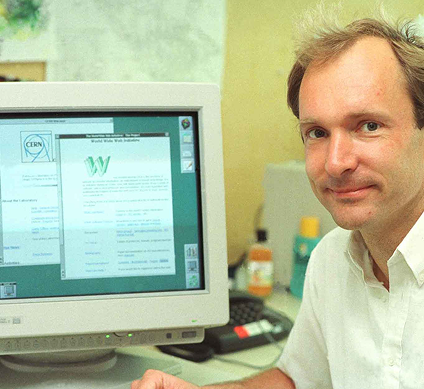
Sir Tim Berners-Lee released the World Wide Web to the public, offering a universal system for linking documents across the internet.
By making the project royalty-free, he ensured that the web would become a global public resource, fundamentally changing how humanity accesses information.
“The web becomes visual.”
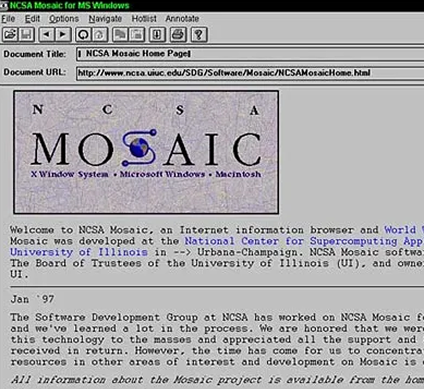
Mosaic was the first popular web browser to display images inline with text, making the web accessible to non-technical users.
Its successor, Netscape Navigator, sparked the first internet boom, leading to mass adoption of the internet in homes and businesses worldwide.
“The world's largest marketplace.”
Jeff Bezos launched Amazon as an online bookstore, while Pierre Omidyar founded eBay as an auction site. These pioneers proved that the internet could be a secure platform for commerce.
They laid the groundwork for the modern digital economy, transforming how the world shops and trades goods.
“Write once, run anywhere.”
Sun Microsystems released Java, a programming language designed to be platform-independent. It quickly became the standard for enterprise applications and early web applets.
Its robustness and security features made it the backbone of banking systems, large-scale web backends, and eventually Android development.

“Start me up.”
Microsoft's Windows 95 launch was a global pop culture event. It introduced the Start menu, taskbar, and plug-and-play support, defining the modern desktop experience.
Bundled with Internet Explorer, it brought millions of users online for the first time, cementing Microsoft's dominance in the PC era.
“Organizing the world's information.”
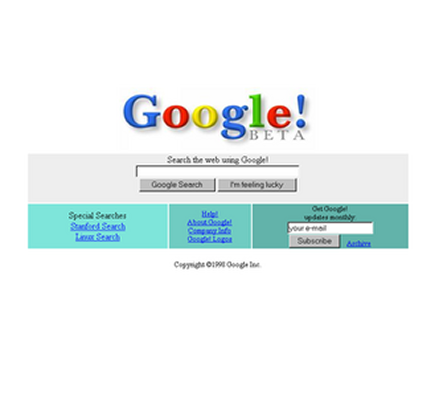
Larry Page and Sergey Brin founded Google, introducing a search engine based on link analysis rather than simple keyword matching.
Their PageRank algorithm provided far superior results, quickly making Google the gateway to the internet and transforming how humanity accesses knowledge.
“Collaboration beats competition.”
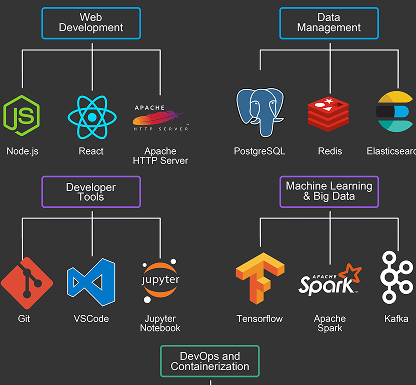
The late 90s saw the rise of the LAMP stack (Linux, Apache, MySQL, PHP/Python/Perl). Open source software proved it could power critical infrastructure reliably and cost-effectively.
This movement democratized software development, allowing startups to build powerful applications without massive licensing fees.
“Irrational exuberance meets real innovation.”
A speculative bubble fueled a massive influx of venture capital into internet startups. While many failed, the era built the fiber-optic infrastructure of the internet.
The survivors of the crash—Amazon, Google, eBay—emerged stronger, ready to dominate the new digital landscape.
“Broadcast Yourself.”
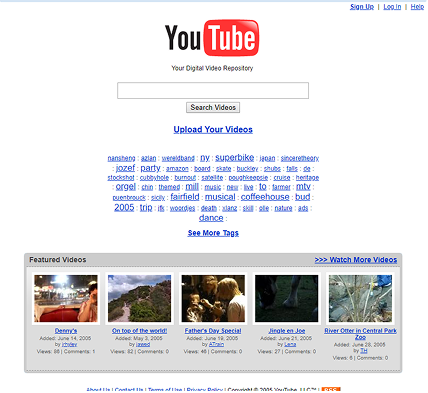
YouTube solved the complexity of sharing video online. It enabled anyone to become a creator, democratizing media production and distribution.
Acquired by Google a year later, it grew into the world's second-largest search engine and a primary source of entertainment and education.
“The invisible backbone of the internet.”
Amazon Web Services (AWS) launched with S3 and EC2, pioneering modern cloud computing. It allowed companies to rent computing power instead of building data centers.
This shift lowered the barrier to entry for startups, enabling the rapid scaling of companies like Netflix, Airbnb, and Uber.

“This changes everything. Again.”
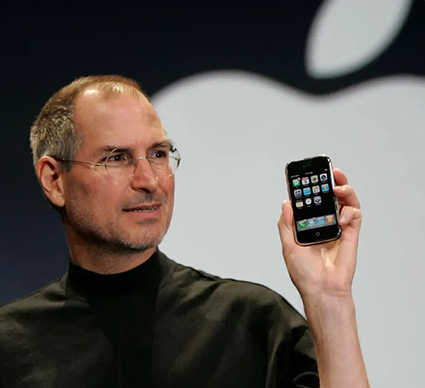
Steve Jobs unveiled the iPhone, combining an iPod, a phone, and an internet communicator. It introduced the multi-touch interface and the modern smartphone form factor.
The iPhone initiated the shift from desktop to mobile computing, putting the internet in everyone's pocket.
“Open mobile for everyone.”
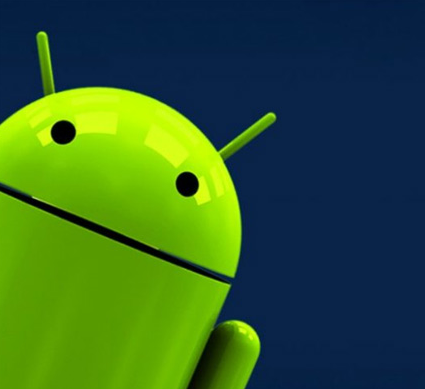
Google launched Android, an open-source mobile operating system based on the Linux kernel. It provided a powerful alternative to iOS for other manufacturers.
Android became the most widely used operating system in the world, bringing smartphones to billions of people across all economic spectrums.
“There's an app for that.”
The rise of the App Store and Google Play created a new way to distribute software. Micro-software applications became a multi-billion dollar industry.
Services like Uber, Instagram, and WhatsApp emerged solely as mobile apps, changing transportation, communication, and photography forever.

“The final invention humans will ever need to make.”
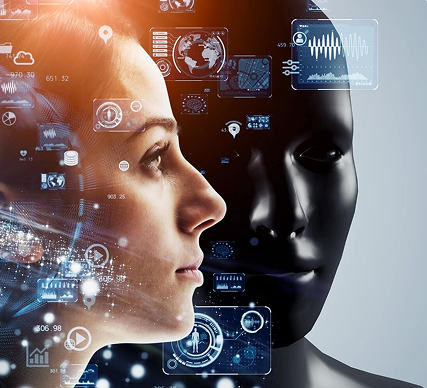
The breakthrough of Generative AI marked a new epoch in computing. Systems capable of understanding, creating, and reasoning began to augment human intelligence.
From coding assistants to creative tools, AI promises to reshape every industry, raising profound questions about the future of work and humanity itself.
The explosion of software complexity, the rise of the internet, and the modern age of coding.
Explore Previous Era →




FACEBOOK & SOCIAL MEDIA
Mark Zuckerberg launched Facebook, expanding on the concepts of Friendster and MySpace to create a real-identity social graph. It redefined human connection.
Social media became the central hub of online life, news distribution, and personal expression for billions of people.
Billions of Users
Social Graph