Modern businesses demand websites and applications that are fast, scalable, secure, and capable of handling growing user traffic without performance issues. From startups launching MVPs to enterprise-level SaaS platforms, scalable web development has become a necessity rather than an option.
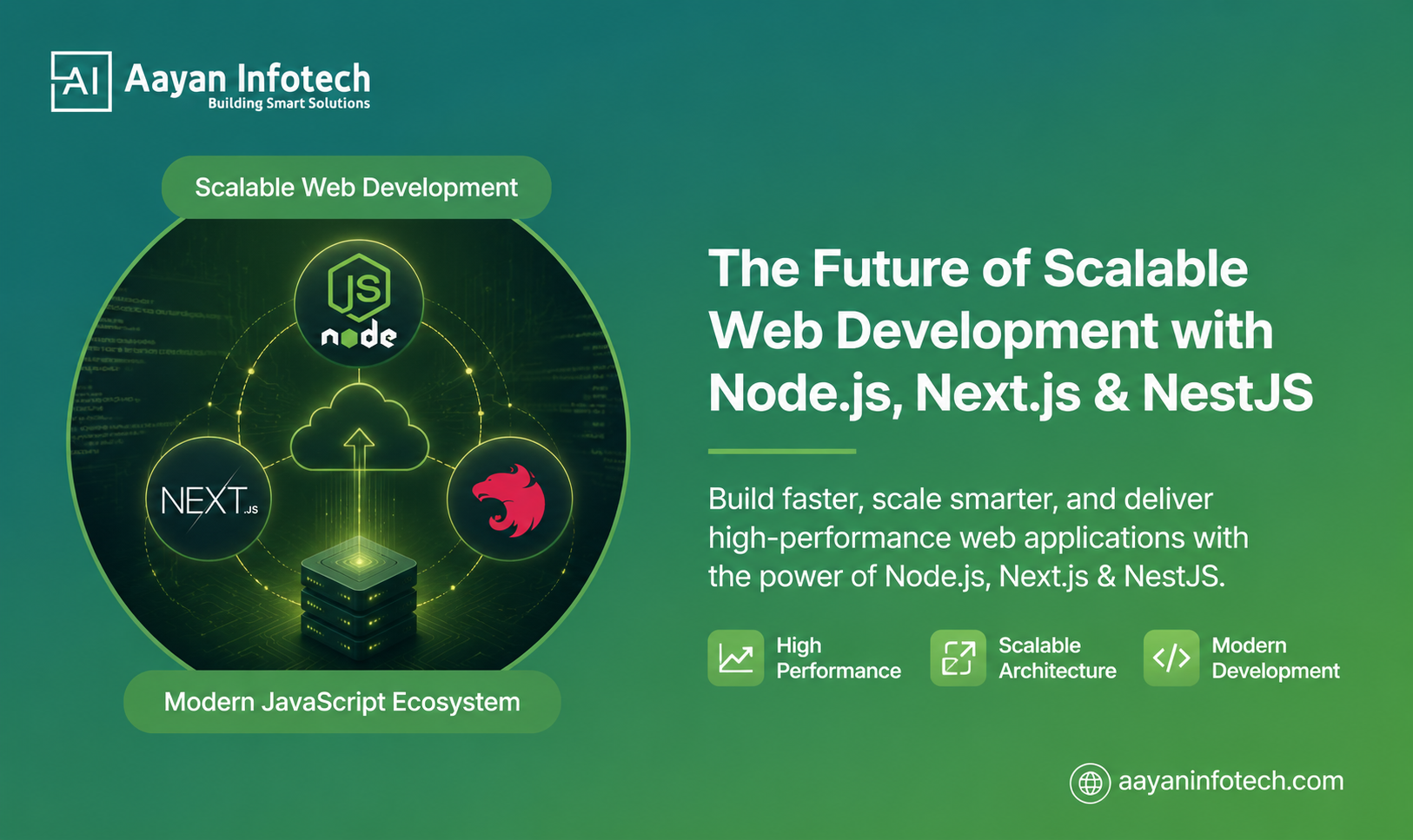
Technologies like Node.js, Next.js, and NestJS are shaping the future of web development by offering powerful tools for building modern full-stack applications. Together, these technologies create a robust ecosystem that supports high performance, maintainability, and scalability.
In this blog, we will explore how Node.js, Next.js, and NestJS are transforming scalable web development and why businesses are increasingly adopting them for future-ready digital solutions.
Scalable web development refers to building applications that can efficiently manage increasing workloads, traffic, and data growth without compromising speed or performance.
A scalable application should be able to:
Traditional monolithic architectures often struggle with modern scalability demands. This is where modern JavaScript frameworks and backend technologies provide a significant advantage.
Why Node.js Is the Foundation of Modern Scalability
Node.js has become one of the most widely used backend technologies because of its event-driven, non-blocking architecture.

Node.js uses the V8 JavaScript engine developed by Google, enabling fast code execution and optimized performance.
Its asynchronous architecture allows applications to process multiple requests simultaneously without blocking operations.
Applications such as:
require real-time data processing. Node.js excels in handling WebSocket communication and real-time interactions efficiently.
Developers can use JavaScript for both frontend and backend development, improving productivity and reducing development complexity.
This unified ecosystem speeds up development cycles and simplifies team collaboration.
Modern scalable applications increasingly use microservices instead of monolithic systems.
Node.js is ideal for microservices because it enables:
The Node.js ecosystem includes millions of packages through npm, allowing developers to build applications faster using pre-built libraries and tools.
How Next.js Is Revolutionizing Frontend Development
Next.js has emerged as one of the most powerful React frameworks for scalable frontend applications.
Built on top of React, Next.js provides features that improve performance, SEO, and user experience.

Traditional React applications rely heavily on client-side rendering, which can affect performance and SEO.
Next.js supports server-side rendering, where pages are rendered on the server before being sent to users.
Benefits include:
Next.js can pre-render pages during build time, resulting in ultra-fast websites.
This is especially beneficial for:
Developers can create backend API endpoints directly within Next.js applications, simplifying development for smaller applications.
Next.js automatically optimizes:
This significantly improves Core Web Vitals and website performance scores.
Search engine optimization is crucial for online visibility.
Next.js provides built-in SEO optimization capabilities including:
This makes it highly suitable for businesses focusing on organic growth.
NestJS is a progressive Node.js framework designed for building scalable and maintainable server-side applications.
Inspired by Angular architecture, NestJS brings structure and enterprise-level organization to backend development.
NestJS uses a modular structure that improves code organization and scalability.
Large applications become easier to:
NestJS is built with TypeScript, providing:
TypeScript is increasingly becoming the standard for enterprise-scale JavaScript applications.
NestJS supports:
This flexibility makes it suitable for complex enterprise systems.
NestJS includes a robust dependency injection mechanism that improves:
This is especially valuable for large development teams.
NestJS follows modern architectural patterns and security practices, helping developers build secure applications with proper validation and authentication systems.
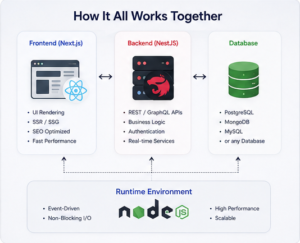
Individually, these technologies are powerful. Together, they create a highly scalable full-stack development ecosystem.
Next.js handles:
NestJS manages:
Node.js powers the server environment for both frameworks.
Shared JavaScript/TypeScript ecosystem reduces context switching and accelerates development.
Applications can scale horizontally using microservices and distributed systems.
Modern tooling, strong documentation, and reusable architecture improve productivity.
The stack delivers:
Many global companies are adopting JavaScript-based full-stack architectures due to flexibility and scalability.
This stack is expected to remain highly relevant for years to come.

This technology stack is ideal for:
Modern applications increasingly integrate AI features such as:
Node.js-based ecosystems simplify API integrations with AI services.
Platforms like Vercel and AWS support serverless deployment models that reduce infrastructure management complexity.
Next.js supports edge rendering, allowing applications to deliver content closer to users for lower latency.
Modern businesses are adopting API-first architecture for omnichannel experiences across:
NestJS is highly effective for API-centric development.
Scalable applications increasingly rely on:
Node.js ecosystems integrate seamlessly with modern DevOps practices

While this stack offers significant advantages, businesses should also consider:
NestJS architecture may require additional learning for beginners.
Scalability requires thoughtful system design from the beginning.
Large-scale applications require:
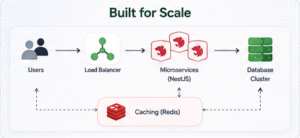
The future of scalable web development is centered around speed, flexibility, performance, and maintainability. Technologies like Node.js, Next.js, and NestJS are helping businesses build modern applications capable of handling future growth efficiently.
By combining powerful frontend rendering, scalable backend architecture, and high-performance server environments, this technology stack enables developers to create applications that are ready for evolving digital demands.
For startups, enterprises, and growing businesses, adopting this modern JavaScript ecosystem can lead to faster innovation, better user experiences, and long-term scalability.