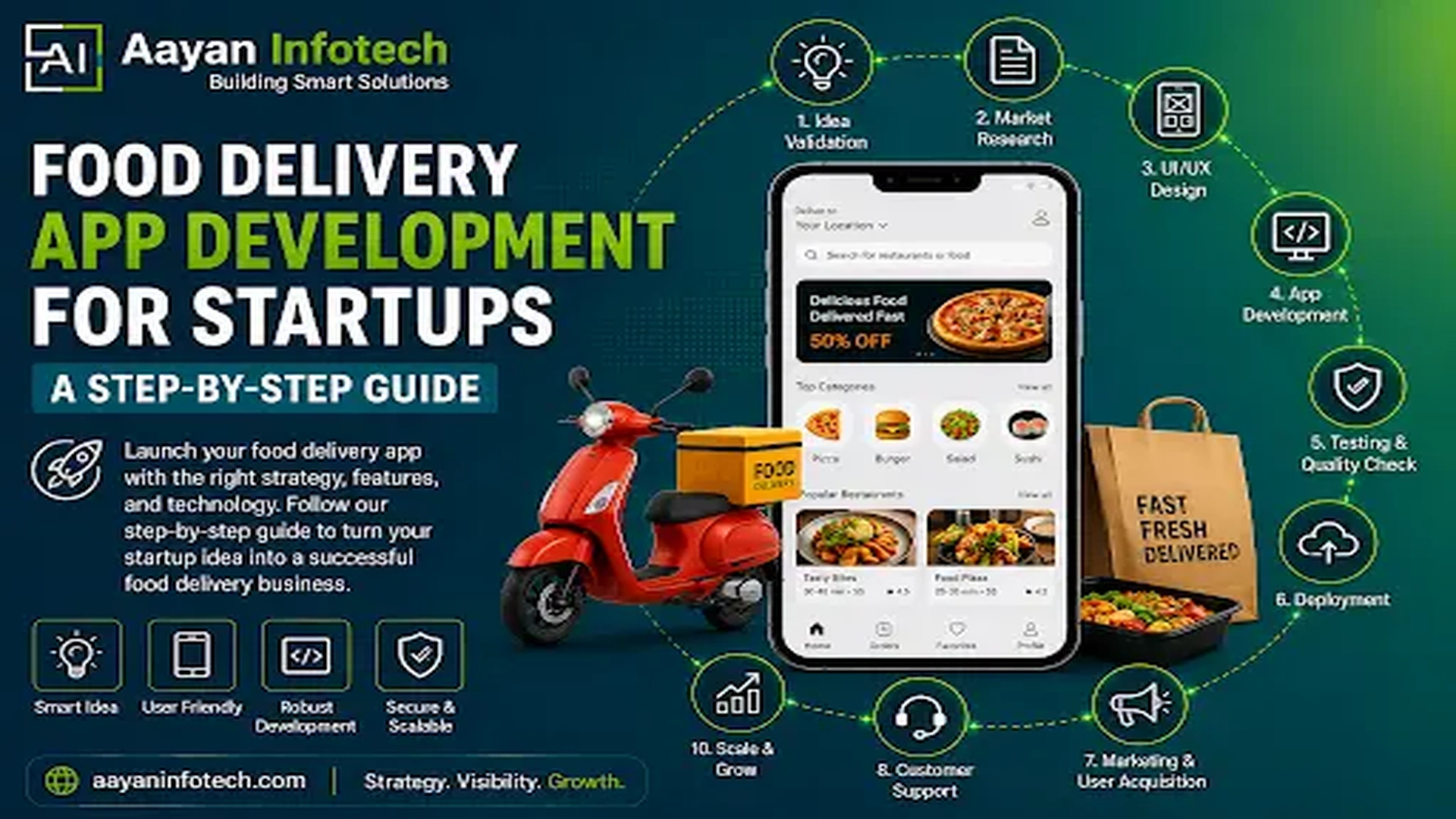
The food delivery industry continues to create opportunities for startups that can offer convenience, speed, and a better customer experience. However, launching a successful delivery platform requires more than simply building an app with a menu and checkout button. Food Delivery App Development involves market research, business planning, UI/UX design, technology selection, payment integration, delivery management, testing, and continuous improvement.
Whether you are launching a local food delivery startup, building a restaurant marketplace, creating a cloud kitchen platform, or developing an on-demand delivery solution for customers worldwide, having the right development strategy can reduce risks and improve your chances of success.
At Aayan Infotech, we help businesses transform app ideas into scalable digital products. From startup MVP development to complete food ordering and delivery platforms, our team focuses on building solutions that are user-friendly, secure, scalable, and ready for future growth.
This step-by-step guide explains everything startups should know about Food Delivery App Development, including business models, essential features, technology considerations, development stages, costs, and launch strategies.
Customers increasingly expect convenience. Instead of calling a restaurant, waiting in line, or visiting multiple websites, users want to discover food, place an order, make a payment, and track delivery from a single mobile application. This creates opportunities for startups to build platforms that solve specific problems in the food and restaurant ecosystem.
A food delivery startup can focus on:
The market is competitive, but startups do not always need to compete directly with global platforms. A well-planned app can target a specific city, customer segment, cuisine, or delivery requirement.
For example, a startup may build a platform focused on vegan meals, office lunch delivery, home-cooked food, late-night food delivery, or restaurant delivery in underserved locations. The key is identifying a real customer problem and developing a solution that provides clear value.
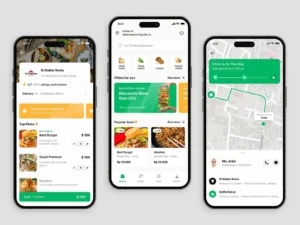
Before beginning Food Delivery App Development, startups should understand that a complete delivery ecosystem usually includes more than one application. A typical platform may include three major components.
The customer application allows users to:
Restaurants need a system to manage incoming orders and operations.
Common features include:
Delivery drivers or riders need a dedicated application to manage deliveries.
Important features can include:
An admin dashboard is also important for managing restaurants, customers, delivery partners, payments, promotions, reports, and platform operations.
The first step in Food Delivery App Development is choosing the right business model. Your business model affects the features, technology, operational requirements, and revenue strategy of the application.
An aggregator platform connects customers with multiple restaurants. Restaurants manage food preparation, while the platform handles customer discovery and may coordinate delivery.
Revenue can come from:
In this model, the platform manages both food ordering and delivery operations. This provides greater control over the customer experience but requires stronger logistics and delivery management systems.
Cloud kitchens operate primarily for delivery rather than traditional dine-in customers. A startup can build a digital ordering system for one or multiple virtual restaurant brands.
Customers pay a recurring fee for regular meal delivery.
This model can work for:
Choosing the right model before development helps prevent expensive changes later.
Many startups make the mistake of investing heavily in development before validating demand.
Before building the app, research:
You should also define your ideal customer.
For example:
Startups should identify the problem their platform solves better than existing alternatives.
Questions to ask include:
For worldwide expansion, it is often better to start with a specific market, validate the model, and then scale to additional cities or countries.
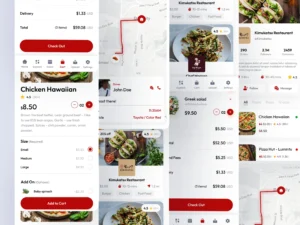
One of the biggest startup mistakes is trying to build every possible feature in the first version. Instead, start with an MVP, or Minimum Viable Product. An MVP includes the core features needed to launch and test the business idea.
Your first version may include:
Restaurants should be able to:
Delivery partners may need:
The admin dashboard should provide control over:
Additional features such as AI recommendations, loyalty programs, advanced analytics, and subscription systems can be added as the business grows.
Technology decisions have a major impact on the future of your platform.
A scalable Food Delivery App Development project should consider:
Startups can choose between native or cross-platform app development. Cross-platform technologies can help reduce development time by allowing businesses to build applications for both Android and iOS from a shared codebase. At Aayan Infotech, technology selection is based on the specific project requirements rather than a one-size-fits-all approach.
For example, the right solution may include technologies for:
The technology should support your current launch requirements while allowing future growth.
Food ordering should feel simple. If users struggle to find restaurants, understand the menu, or complete payment, they may abandon the application.
A strong UI/UX process focuses on:
The design should also work effectively across different screen sizes. Mobile responsiveness is especially important because many users will interact with the platform primarily through smartphones. A good user experience can improve customer retention and encourage repeat orders.
For startups with limited budgets, launching an MVP is often a practical strategy. The first version should solve the main customer problem without unnecessary complexity.
For example, your MVP could include:
After launch, you can collect feedback from real users.
This feedback can help answer important questions:
This approach allows startups to make decisions based on real user behavior instead of assumptions.
Third-party integrations are an important part of Food Delivery App Development.
Customers may expect multiple payment methods depending on the target market.
Options can include:
Payment security should be a priority. Startups should work with trusted payment providers and follow relevant security requirements. For general guidance on protecting online and mobile systems, developers can follow resources from OWASP, a widely recognized source for application security best practices.
Location technology supports:
For a worldwide food delivery platform, location systems should be designed to support different countries, cities, addresses, and regional requirements.
Notifications can keep users informed about:
However, notifications should provide value and should not overwhelm users.
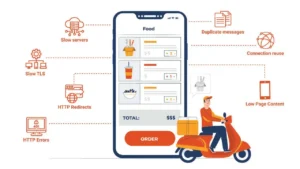
Testing should take place throughout development rather than only at the end.
A food delivery platform should be tested for:
Test different scenarios.
For example:
Identifying these problems before launch can protect your customer experience and brand reputation.
A global vision does not require a global launch.
Many successful digital businesses begin with a specific market and expand after validating operations.
You could initially target:
For example, your startup may initially focus on food delivery in Dubai, London, New York, Singapore, Toronto, Sydney, or another target market before expanding internationally. Local SEO and market-specific landing pages can support growth in each location.
Pages can target relevant searches such as:
This approach helps businesses target both international and location-based search opportunities.
The cost of building a food delivery app depends on several factors.
These include:
A simple MVP will generally require less investment than a large multi-country marketplace with advanced delivery automation.
Instead of focusing only on the initial development cost, startups should also consider:
The best approach is to define your business requirements first and request a detailed development plan.
Startups should prepare for several common challenges.
Orders must move smoothly between customers, restaurants, delivery partners, and administrators.
Assigning the right delivery partner can affect delivery speed and operational costs.
The platform must remain reliable when order volume increases.
Acquiring users is only part of the challenge. A good experience, loyalty benefits, and reliable service encourage customers to return.
Food delivery apps process personal, location, and payment-related information. Security should be considered throughout the development process.
Aayan Infotech provides digital development services for startups and businesses looking to build scalable mobile and web solutions.
Our development approach can include:
Our goal is to help businesses move from an initial concept to a practical digital product.
A food delivery app is not simply a mobile application. It is a connected digital ecosystem involving customers, restaurants, delivery operations, payments, location services, and business management.
A professional development team can help startups:
The right development partner should understand both technology and the business goals behind the application.
Food Delivery App Development can provide startups with an opportunity to build innovative digital platforms for a growing on-demand economy. However, success depends on more than having a good idea. Start with market research. Choose the right business model. Build an MVP with essential features. Focus on a simple user experience. Test the platform carefully. Then use real customer feedback to improve and scale the product.
If you are planning to launch a local, regional, or global food delivery platform, Aayan Infotech can help you plan, design, and develop a solution based on your business requirements. Whether your goal is to launch in Dubai, the USA, the UK, Australia, India, or another international market, the right technology strategy can help you create a scalable platform for long-term growth.
Contact Aayan Infotech today to discuss your food delivery app idea and take the first step toward building a reliable, user-friendly, and scalable digital platform.