Before the silicon chip, there was the dawn of logic. Explore the foundational ideas—from the tactile beads of the Abacus to the theoretical power of programmable mechanical engines that laid the groundwork for the digital age.
“The first step away from the raw binary abyss.”
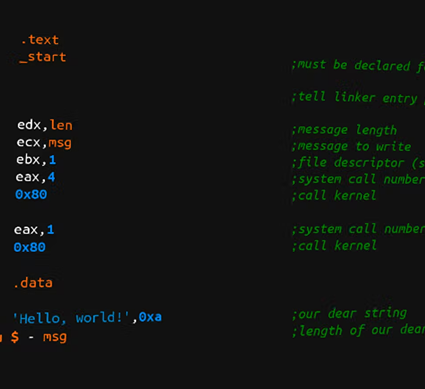
Assembly language emerged as the first layer of abstraction over raw machine code. It allowed programmers to use mnemonic codes like 'ADD' or 'MOV' instead of strings of ones and zeros.
This critical leap made programming more understandable and less error-prone, though it remained tightly coupled to the specific architecture of the machine.
“Automating the programmer's work.”
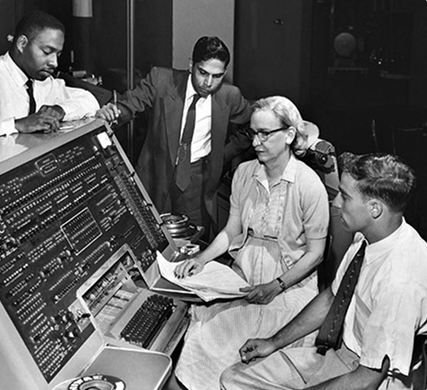
Created by Grace Hopper for the UNIVAC I, the A-0 system was the first compiler. It allowed a program to be written as a sequence of subroutines identified by a numeric code.
The system would then retrieve the subroutines from a library on magnetic tape and compile them into machine code, introducing the concept of automated translation.
“The language of science for over half a century.”
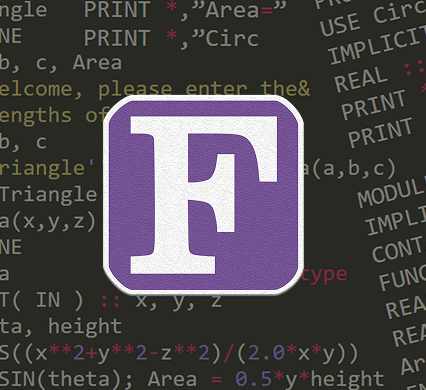
Developed by John Backus at IBM, FORTRAN (Formula Translation) was the first widely used high-level general-purpose programming language. It was designed for numeric computation and scientific computing.
It proved that an efficient compiler could generate code comparable to hand-coded assembly, revolutionizing the field by making programming accessible to scientists and engineers.
“Programming in plain English.”
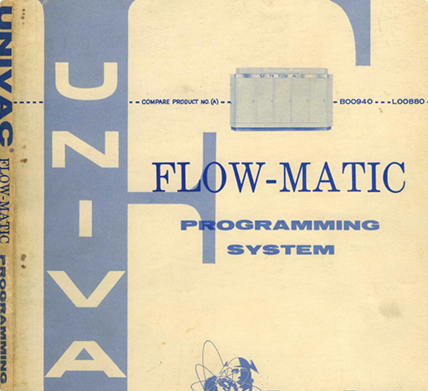
Another breakthrough by Grace Hopper, FLOW-MATIC was the first data processing language to look like English. It used commands like "COMPARE" and "TRANSFER" instead of cryptic math symbols.
It was designed for business applications and served as the primary influence for the development of COBOL.
“The language of Artificial Intelligence.”
Created by John McCarthy at MIT, LISP (List Processing) is the second-oldest high-level programming language still in common use today. It introduced recursive function theory to programming.
Its unique parenthesized syntax and ability to treat code as data made it the favored language for AI research for decades.
“The algorithm language that defined syntax.”
ALGOL (Algorithmic Language) was developed by an international committee to be a universal language for algorithms. It introduced block structure, nested functions, and lexical scope.
While not as commercially successful as FORTRAN, it heavily influenced the design of Pascal, C, C++, and Java, effectively defining how modern code looks.

“The engine of global business.”
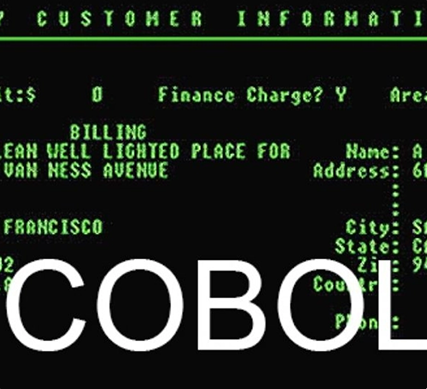
COBOL (Common Business-Oriented Language) was designed for business data processing. It prioritized readability and data handling over mathematical complexity.
Decades later, a vast amount of the world's banking and government systems still run on COBOL, a testament to its reliability and specific design for enterprise logic.
“The master of strings and patterns.”
Developed at Bell Labs, SNOBOL (String Oriented and Symbolic Language) was designed specifically for text string manipulation. It introduced powerful pattern-matching capabilities long before Regular Expressions became standard.
It was widely used in the humanities for text analysis and by early computer scientists for writing compilers and interpreters.
“Bringing coding to the masses.”
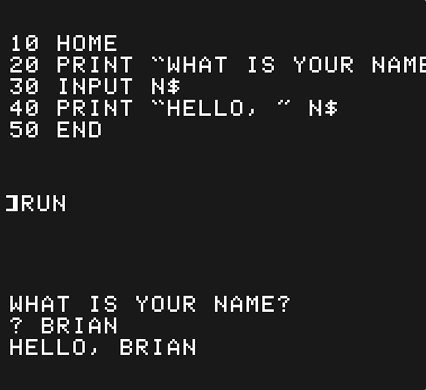
Beginner's All-purpose Symbolic Instruction Code (BASIC) was designed at Dartmouth College to enable students in fields other than science and math to use computers.
Its simple syntax and interpreted nature made it the default language for the microcomputer revolution of the 1970s and 80s, launching millions of programming careers.
“The grand unification attempt.”
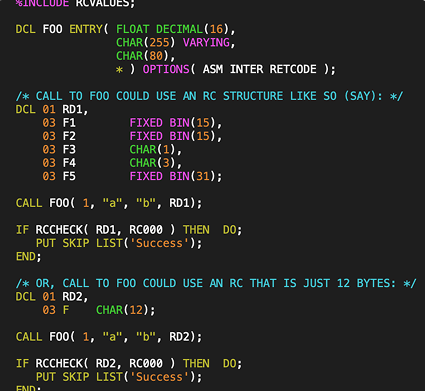
PL/I (Programming Language One) was IBM's ambitious attempt to replace FORTRAN, COBOL, and others with a single, all-purpose language for their System/360 mainframes.
While powerful and feature-rich, its complexity made it difficult to implement and learn, serving as a lesson in the trade-offs of language design.
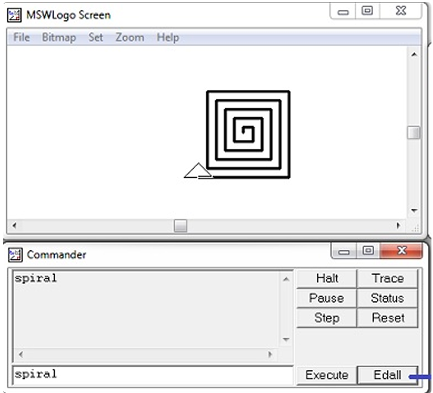
“Teaching children to think with turtles.”
Created by Seymour Papert and others, Logo was an educational language known for its "turtle graphics." Students could program a small on-screen turtle to draw geometric shapes.
It was based on LISP but simplified for children, introducing constructionist learning theory to computer science education.
“The birth of Object-Oriented Programming.”
Developed in Norway, Simula was originally designed for simulations, but it introduced the revolutionary concepts of classes, objects, and inheritance.
It is the direct ancestor of Smalltalk, C++, and Java, laying the foundation for the object-oriented paradigm that dominates modern software development.
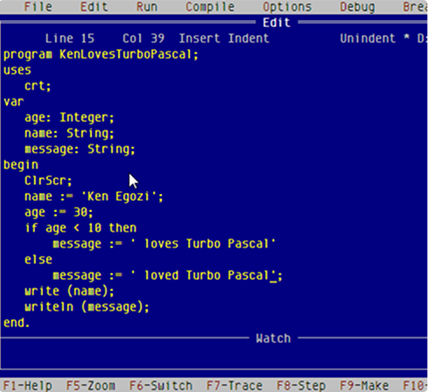
“Structured programming for the academic world.”
Designed by Niklaus Wirth, Pascal was intended to encourage good programming practices using structured programming and data structuring.
It became the primary language for computer science education in the 1970s and 80s and was later used commercially, famously for the original Apple Lisa and Macintosh operating systems.
“The lingua franca of systems programming.”
Created by Dennis Ritchie at Bell Labs to develop the Unix operating system, C combined the efficiency of assembly with the readability of high-level languages.
It remains one of the most widely used languages of all time, serving as the foundation for modern operating systems, embedded systems, and languages like C++, C#, Java, and Python.
“Everything is an object.”
Developed at Xerox PARC by Alan Kay, Dan Ingalls, and Adele Goldberg, Smalltalk was the first pure object-oriented language. It also pioneered the graphical user interface (GUI) concepts we use today.
Its influence is immeasurable, directly inspiring the Macintosh UI, Windows, and modern languages like Objective-C, Java, and Ruby.
The explosion of software complexity, the rise of the internet, and the modern age of coding.
Explore Next Era →