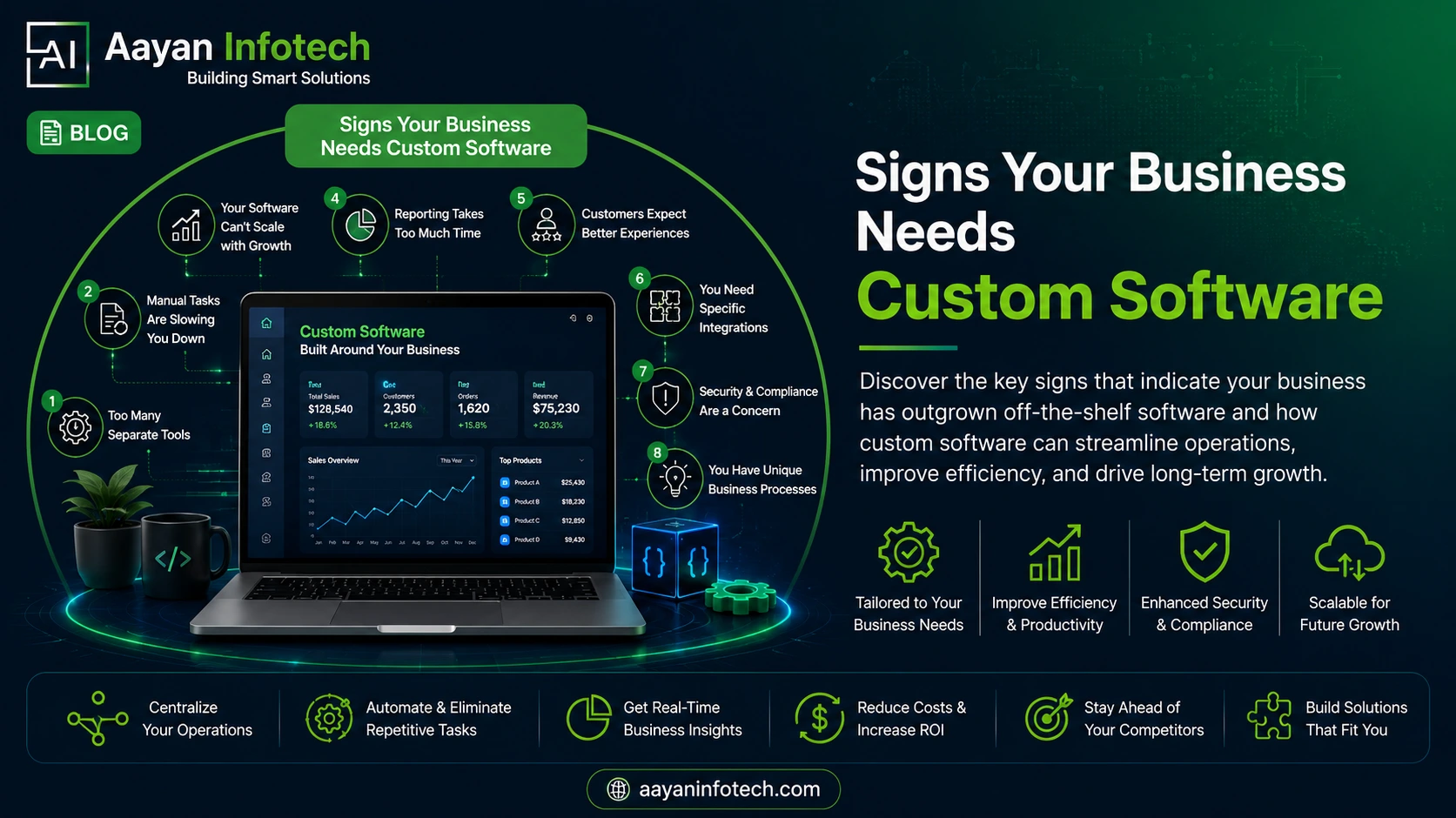
Growing businesses often reach a stage where standard software no longer supports their daily operations efficiently. If your employees spend more time working around software limitations than completing important tasks, it may be time to invest in Custom Software. The following signs can help you determine whether your business is ready for a tailored solution.

Many businesses rely on multiple applications to manage customer data, accounting, inventory, communication, and project management. While each tool may perform its own function well, switching between different systems slows productivity and increases the risk of errors.
Without Custom Software, employees often have to enter the same information multiple times across different platforms. This creates duplicate records, inconsistent data, and unnecessary administrative work. As your business grows, managing disconnected systems becomes even more challenging.
A Custom Software Solution integrates all essential business functions into a single platform. Teams can access accurate information from one dashboard, collaborate more effectively, and reduce manual work. Integrated software also improves reporting by providing real-time business insights.
Example:
A growing retail company uses separate software for sales, inventory, customer support, and accounting. After implementing Custom Software, all departments work from one centralized system, reducing administrative tasks and improving operational efficiency.
Key Takeaway
If your employees regularly switch between multiple applications to complete a single task, Custom Software can simplify operations and improve productivity.
Repetitive manual work is one of the biggest signs that your business has outgrown standard software. Tasks such as creating invoices, updating spreadsheets, generating reports, sending follow-up emails, and processing customer requests consume valuable time.
Employees spending hours on repetitive activities have less time to focus on customer service, innovation, and strategic planning. Manual processes also increase the likelihood of human error, resulting in inaccurate records and delayed decision-making.
Custom Software automates repetitive workflows by handling routine tasks automatically. Businesses can create automated approval processes, notifications, document generation, payment reminders, and reporting systems tailored to their specific operations.
For example, instead of manually updating customer records across several systems, Custom Software synchronizes data automatically, ensuring all departments work with accurate information.
Start by identifying repetitive tasks that consume the most employee time. These processes often deliver the highest return on investment when automated through Custom Software.

Business growth brings new customers, employees, products, and operational requirements. Software that worked well for a small company may become inefficient as your organization expands.
Common signs include slower system performance, limited user access, storage restrictions, and the inability to add new features. These limitations can affect customer satisfaction and employee productivity.
Custom Software is designed specifically for your business goals and can grow alongside your organization. Whether you need additional modules, cloud integration, advanced analytics, or support for multiple locations, scalable software provides long-term flexibility.
Instead of replacing your software every few years, a scalable Custom Software solution evolves with your changing business requirements. This reduces future migration costs and minimizes operational disruptions.
Many businesses continue purchasing additional third-party applications to solve growth challenges. This often increases complexity rather than solving the underlying problem. Investing in scalable Custom Software provides a more sustainable long-term solution.
Business leaders depend on accurate reports to make informed decisions. Unfortunately, many companies spend hours collecting data from multiple systems before creating management reports.
When information is scattered across spreadsheets and disconnected applications, reports often contain outdated or inconsistent data. This delays decision-making and reduces confidence in business performance metrics.
With Custom Software, reporting becomes faster and more reliable. The system collects data automatically from every department and presents it through customizable dashboards. Managers can monitor sales performance, customer behavior, inventory levels, financial results, and operational efficiency in real time.
Automated reporting also allows executives to identify trends, measure key performance indicators, and respond quickly to changing business conditions.
If generating reports requires hours of manual work every week, implementing Custom Software can save time, improve accuracy, and provide valuable business insights.
Customer expectations have changed significantly. Today’s customers expect fast responses, personalized interactions, seamless online experiences, and quick issue resolution. If your existing software struggles to meet these expectations, it could negatively impact customer satisfaction and loyalty.
Many off-the-shelf solutions offer limited customization, making it difficult to create personalized customer journeys. Businesses often find themselves adapting their processes to fit the software rather than using technology that supports their unique customer experience goals.
Custom Software allows businesses to create customer-centric solutions tailored to their operations. Whether it’s a custom customer portal, appointment booking system, loyalty program, or self-service dashboard, Custom Software Development helps improve user experiences and strengthen customer relationships.
For example, an eCommerce company can develop a personalized recommendation engine that suggests products based on customer preferences and purchase history. Similarly, a service-based business can implement an online booking platform with automated reminders and real-time availability.
Map your customer journey and identify pain points. If your current software creates delays or friction, investing in Custom Software can significantly improve customer satisfaction and retention.

As businesses grow, protecting sensitive customer and business data becomes more important than ever. Generic software often includes features you don’t need while lacking the security controls required for your specific industry.
Businesses operating in healthcare, finance, education, or eCommerce must comply with strict data protection regulations. Relying on software that doesn’t meet compliance standards can expose your organization to financial penalties and reputational damage.
Custom Software gives businesses greater control over data security. Features such as role-based access, encrypted databases, multi-factor authentication, secure APIs, and detailed audit logs can be designed specifically for your requirements.
Unlike off-the-shelf software, Custom Software Development also allows security updates and enhancements to be implemented based on your organization’s evolving needs.
Many businesses assume that widely used software automatically meets all compliance requirements. Every organization has unique security obligations, making Custom Software a more reliable long-term investment.
Every successful business develops unique workflows that help it stand out from competitors. Unfortunately, generic software often forces companies to change their established processes instead of supporting them.
If employees constantly create workarounds, maintain additional spreadsheets, or manually adjust reports, it’s a strong indication that your software no longer fits your business.
Custom Software is designed around your existing workflows rather than requiring your team to adapt. Whether you need custom approval processes, specialized inventory management, unique pricing models, or industry-specific reporting, a tailored solution improves efficiency while supporting business growth.
For instance, a manufacturing company may require production tracking, machine monitoring, and quality control within a single platform. A logistics company might need route optimization, fleet management, and shipment tracking integrated into one system.
Your software should support the way your business operates—not force your business to change its successful processes.
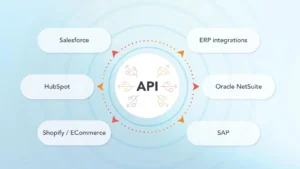
Modern businesses rely on multiple digital platforms, including CRM systems, accounting software, ERP solutions, payment gateways, cloud storage, and marketing tools. When these systems don’t communicate effectively, employees spend valuable time transferring data manually.
Poor integration leads to duplicated information, reporting inconsistencies, delayed workflows, and increased operational costs.
Custom Software can connect your existing applications through secure APIs, creating a unified digital ecosystem. Instead of replacing every system, businesses can integrate the tools they already use while improving efficiency and data accuracy.
For example, customer orders can automatically update inventory, generate invoices, notify the warehouse, and send shipping confirmations without manual intervention. This reduces delays and improves overall business performance.
Before purchasing another standalone application, evaluate whether Custom Software integration could solve multiple business challenges with a single solution.
Investing in Custom Software provides long-term value that extends beyond solving immediate operational challenges. A tailored solution helps businesses improve efficiency, reduce costs, and remain competitive in an increasingly digital marketplace.
Organizations across many sectors rely on Custom Software to streamline operations and gain a competitive advantage.
| Industry | How Custom Software Helps |
| Healthcare | Patient management, appointment scheduling, electronic health records |
| Finance | Secure transactions, compliance management, fraud detection |
| Retail & eCommerce | Inventory control, customer loyalty programs, personalized shopping |
| Manufacturing | Production planning, quality assurance, supply chain management |
| Logistics | Fleet management, route optimization, shipment tracking |
| Education | Learning management systems, student portals, online assessments |
| Real Estate | Property management, CRM, document automation |
| Hospitality | Booking systems, guest management, payment integration |
Recent industry research highlights the growing importance of tailored software solutions:

A mid-sized distribution company relied on separate applications for inventory management, accounting, and customer orders. Employees manually transferred data between systems, leading to delays, duplicate records, and reporting errors.
The company invested in Custom Software that integrated inventory management, order processing, invoicing, and customer relationship management into one centralized platform.
The new solution enabled the business to scale operations while maintaining efficiency and delivering a better customer experience.
Selecting the right technology partner is just as important as deciding to invest in Custom Software. A reliable software development company will understand your business goals, recommend the right technology, and deliver a solution that supports long-term growth.
Before making a decision, evaluate the following factors:
Choose a company with proven experience in developing Custom Software Development for businesses similar to yours. Industry knowledge helps developers understand your workflows, compliance requirements, and customer expectations.
Ensure the development team has expertise in modern technologies, cloud platforms, API integrations, mobile applications, web development, and enterprise software architecture.
An Agile approach allows regular feedback, faster development cycles, and greater flexibility when business requirements change.
Ask about secure coding practices, data encryption, authentication methods, and compliance with recognized security standards.
Review previous projects and client testimonials to evaluate quality, reliability, and successful project delivery.
Your software should continue evolving after launch. Choose a partner that provides maintenance, updates, performance monitoring, and technical support.
As businesses grow, their technology requirements become more complex. Relying on generic software may work in the early stages, but it often creates inefficiencies, limits scalability, and increases operational costs over time. Recognizing the signs discussed in this article can help you determine whether it’s time to invest in Custom Software Development.
From reducing manual work and improving reporting to strengthening security, integrating business systems, and enhancing customer experiences, Custom Software provides the flexibility needed to support long-term growth. It is designed around your unique business processes rather than forcing your team to adapt to software limitations.
If your organization is experiencing any of these challenges, now is the right time to explore a tailored solution. Partnering with an experienced Custom Software development company can help streamline operations, improve productivity, and prepare your business for future success.
At Aayan Infotech, we specialize in designing and developing secure, scalable, and high-performance Custom Software solutions tailored to your business goals. Whether you need workflow automation, enterprise applications, CRM systems, ERP platforms, or cloud-based software, our experienced team is ready to help.
Contact Aayan Infotech today for a free consultation and discover how the right Custom Software solution can transform your business operations and drive sustainable growth.