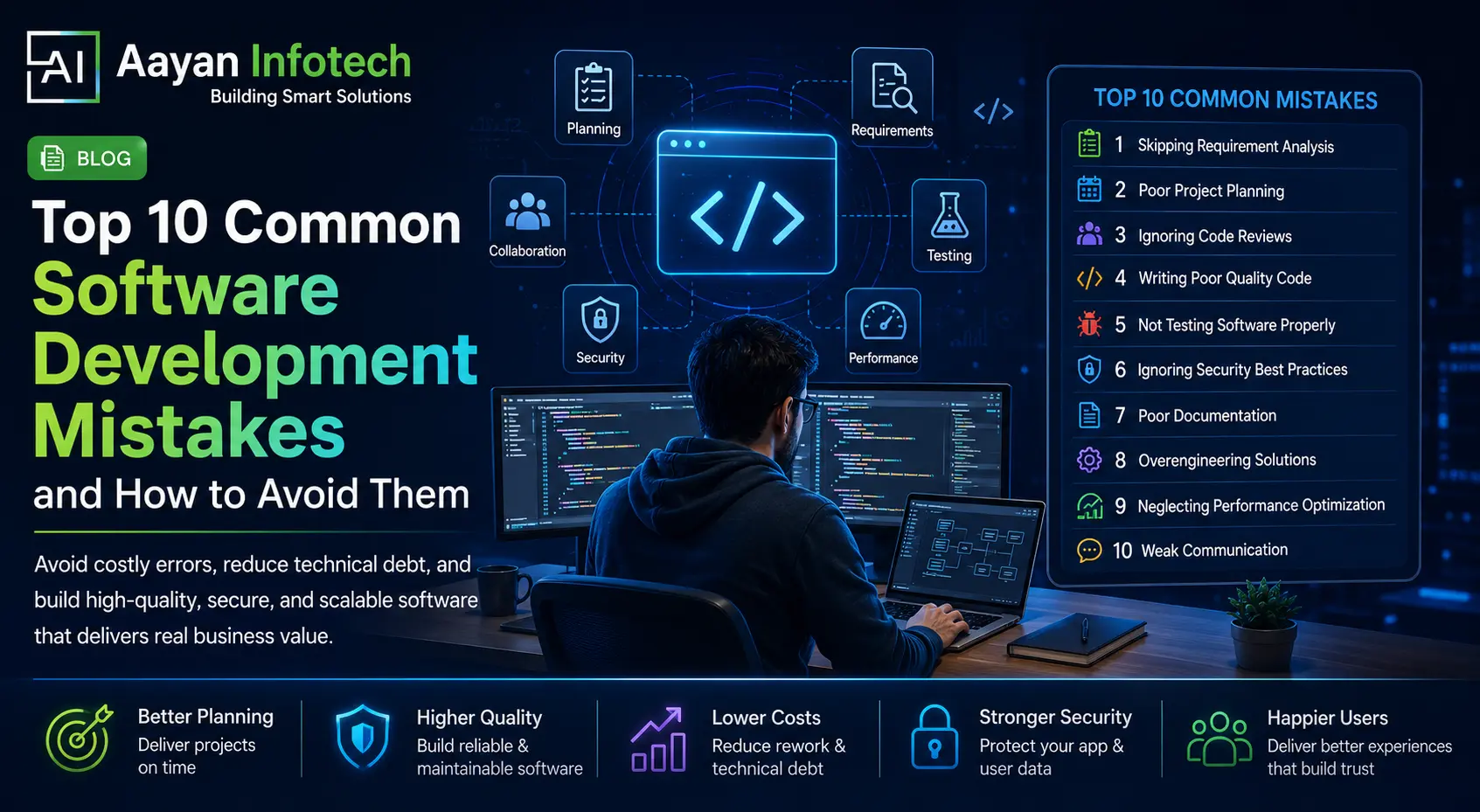
Software Development is the driving force behind modern websites, mobile applications, enterprise systems, and cloud-based platforms. Businesses rely on well-planned software to improve operations, enhance customer experiences, and stay competitive. However, even experienced developers can make mistakes that lead to project delays, security vulnerabilities, increased development costs, and dissatisfied users.
Whether you’re a beginner, an experienced developer, or a business owner, Software Development requires careful planning, clean coding, thorough testing, and continuous collaboration. In this guide, you’ll learn the top 10 software development mistakes, why they happen, and practical ways to avoid them so your projects are delivered on time, within budget, and with high quality.
The most common Software Development mistakes include:
Avoiding these mistakes helps improve software quality, reduce technical debt, and increase project success.
Every software project starts with an idea, but not every idea becomes a successful product. Many projects fail because development teams focus on writing code before fully understanding business requirements.
Poor communication between stakeholders, unrealistic deadlines, changing customer expectations, and weak testing strategies often create problems that become expensive to fix later.
Successful Software Development is more than programming. It combines planning, collaboration, testing, security, documentation, and continuous improvement throughout the Software Development Lifecycle (SDLC).
Requirement analysis is one of the most important stages of Software Development. It ensures developers understand what users actually need before writing a single line of code.
Unfortunately, many teams rush into development without gathering complete requirements. This often leads to scope changes, missed expectations, and costly rework.
Pro Tip: Spending extra time on requirement analysis can save weeks of development effort later in the project.

Many software teams underestimate the importance of planning. Without a clear roadmap, projects quickly become difficult to manage.
Poor planning often results in missed deadlines, budget overruns, duplicated work, and frustrated team members.
A well-planned project gives every team member clear goals and responsibilities, making collaboration more effective.
Code reviews are one of the simplest ways to improve software quality. They allow developers to identify bugs, improve readability, and maintain consistent coding standards before code reaches production.
Skipping code reviews increases the chances of introducing defects and security vulnerabilities.
How to Improve the Review Process
Regular code reviews create better software while helping developers learn from one another.

Poor code quality creates technical debt that becomes increasingly expensive over time. Code that is difficult to read or maintain slows development and introduces unnecessary risks.
Clean code makes future updates easier and reduces maintenance costs.
Testing is an essential part of Software Development. Releasing software without adequate testing can result in crashes, poor performance, and security vulnerabilities that damage customer trust.
Many teams only perform manual testing, leaving critical issues undiscovered until users encounter them.
Comprehensive testing helps deliver reliable applications while reducing long-term maintenance costs.
Every mistake discussed above affects software quality, customer satisfaction, and business success. Small problems introduced early in the Software Development process often become major challenges later if they are not addressed.
By investing time in planning, writing clean code, reviewing changes, and testing thoroughly, development teams can build applications that are secure, scalable, and easier to maintain.
We’ll cover the remaining five mistakes: Software Development best practices, People Also Ask questions, FAQ section, conclusion, author bio, references, internal and external links, and a strong call-to-action.
Security should never be an afterthought in Software Development. Cyberattacks are becoming more sophisticated, and even a small vulnerability can expose sensitive customer data or disrupt business operations.
Many developers focus on adding new features while overlooking secure coding practices. As a result, applications become vulnerable to common threats such as SQL injection, cross-site scripting (XSS), and broken authentication.
Building security into every stage of the Software Development Lifecycle (SDLC) helps reduce risks and protects both businesses and users.

Documentation is often overlooked, but it plays a crucial role in successful Software Development. Without proper documentation, developers spend more time understanding code, onboarding becomes slower, and future maintenance becomes difficult.
Well-maintained documentation saves time and ensures long-term project sustainability.
Overengineering happens when developers build complex systems to solve problems that don’t yet exist. While it’s important to plan for growth, unnecessary complexity increases development time and maintenance costs.
Simple solutions are often easier to maintain, scale, and debug.
Performance is a critical factor in modern Software Development. Slow applications frustrate users, reduce productivity, and can even affect search engine rankings for web applications.
Performance optimization should be an ongoing process rather than a one-time task.

Strong communication is the foundation of successful Software Development. Miscommunication can lead to duplicated work, misunderstood requirements, delayed releases, and lower-quality software.
Effective communication keeps projects aligned and helps teams solve problems faster.
To consistently deliver high-quality software, follow these proven best practices:
These practices reduce project risks and improve collaboration, scalability, and long-term maintainability.
Choosing the right technology partner can make all the difference in the success of your software project. Whether you need a custom business application, a responsive website, a mobile app, cloud-based software, or enterprise-grade solutions, Aayan Infotech is here to help.
Our experienced team specializes in custom Software Development, web development, mobile app development, AI solutions, cloud technologies, DevOps, and ongoing software support. We build secure, scalable, and high-performance solutions that are tailored to your business goals and future growth.
Don’t let common development mistakes slow down your project. Partner with Aayan Infotech to turn your ideas into reliable, innovative, and business-driven software solutions.