From the thunderous clatter of relays to the silent speed of electrons. Witness the rise of the first true giants of computing— machines that broke codes, calculated ballistics, and birthed the digital age.
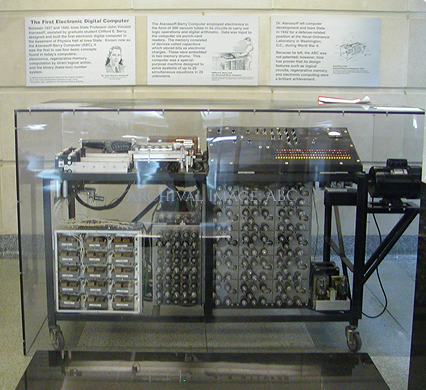
“The unsung hero of electronic digital computing.”
Built by John Vincent Atanasoff and Clifford Berry at Iowa State College, the ABC was the first automatic electronic digital computer. Though non-programmable, it pioneered key concepts.
It introduced the use of binary arithmetic, parallel processing, and regenerative capacitor memory, laying the groundwork for the ENIAC and all modern computers.
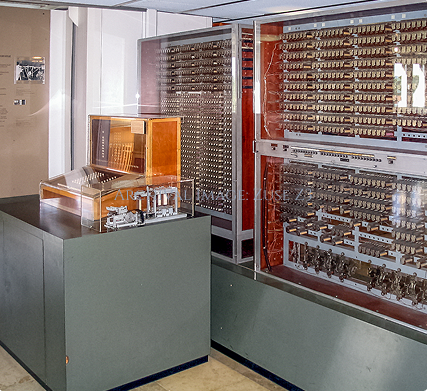
“The quiet dawn of the programmable age.”
Konrad Zuse completed the Z3 in Berlin during WWII. Built with 2,000 relays, it was the first working programmable, fully automatic digital computer.
It used binary floating-point arithmetic, a standard still used in modern computing, though its program was stored on punched film tape.
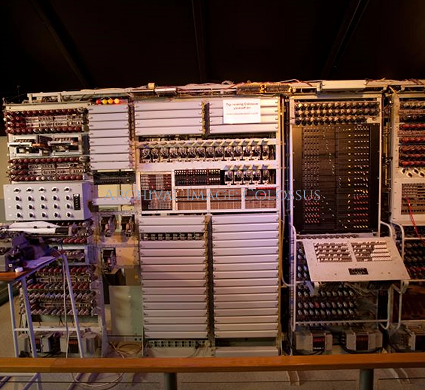
“The secret weapon that saved millions of lives.”
Developed by Tommy Flowers at Bletchley Park, Colossus was the world's first programmable, electronic, digital computer. It was designed to break the sophisticated Lorenz codes used by the German High Command.
Its existence was kept secret for decades, but its architecture proved that large-scale electronic computing was fast, reliable, and possible.
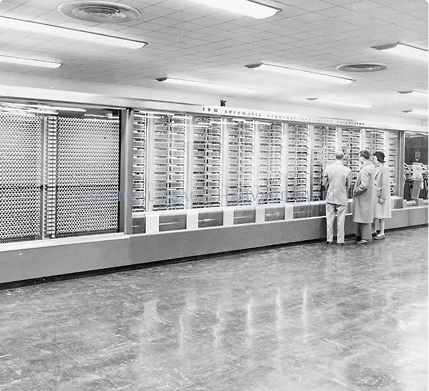
“Fifty feet of clicking shafts and gears.”
Conceived by Howard Aiken and built by IBM, the Mark I was a massive electromechanical computer. It was the first fully automatic machine to be completed in the United States.
Grace Hopper, one of its first programmers, would later discover the first actual computer "bug" (a moth) in its successor, cementing the terminology forever.
“A giant brain of vacuum tubes.”
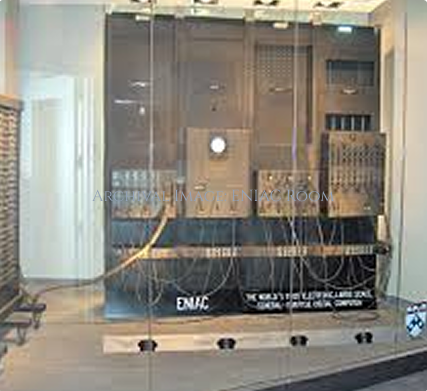
The Electronic Numerical Integrator and Computer (ENIAC) was the first electronic general-purpose digital computer. It was a behemoth, occupying a large room and using 18,000 vacuum tubes.
Its speed was unprecedented—calculating artillery trajectories in seconds rather than hours. It marked the shift from slow mechanical parts to lightning-fast electronic switching.
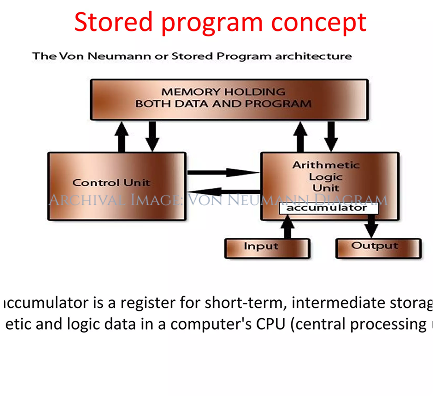
“The blueprint for a stored-program future.”
John von Neumann described a computer architecture where data and program instructions are stored in the same memory space. This "stored-program" concept allows computers to be easily reprogrammed without physical rewiring.
This architecture remains the standard design for nearly all computers today, from supercomputers to smartphones.
“The moment software came alive.”
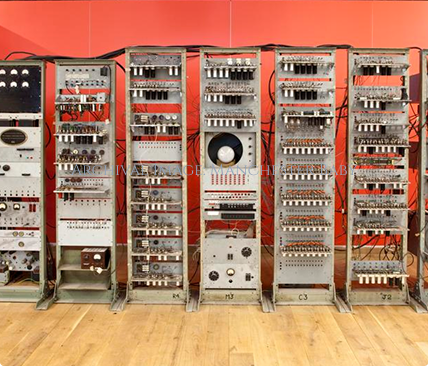
The Small-Scale Experimental Machine (SSEM), nicknamed "Baby," was the world's first electronic stored-program computer. It successfully ran its first program on June 21, 1948.
It was built primarily to prove the viability of the Williams tube for random-access memory, but in doing so, it became the first machine to embody the complete modern computer definition.
“Scaling the Baby to a full-sized giant.”
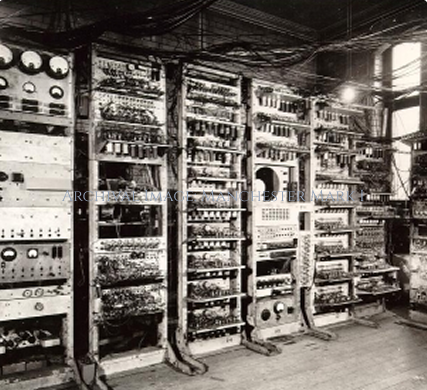
Building on the SSEM, the Manchester Mark I was a fully practical machine with index registers and a magnetic drum for secondary storage.
It was used for scientific research at the university and served as the direct prototype for the Ferranti Mark I, the world's first commercially available general-purpose computer.
“The first practical stored-program computer”
Built at the University of Cambridge by Maurice Wilkes, the Electronic Delay Storage Automatic Calculator (EDSAC) was designed from the start to be a practical tool for researchers.
It was the first computer to run a realistic application and introduced the concept of a library of subroutines, making programming significantly more efficient.
— Maurice Wilkes
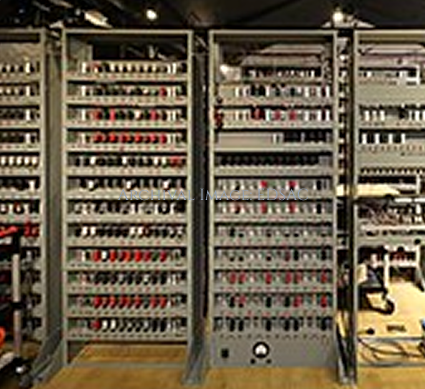
“Double the processors, double the reliability.”
The Binary Automatic Computer (BINAC) was designed by the Eckert-Mauchly Computer Corporation. It was notable for having dual CPUs that checked each other's results.
If the results differed, the machine would halt, ensuring high reliability—a critical feature for its intended use in missile guidance.
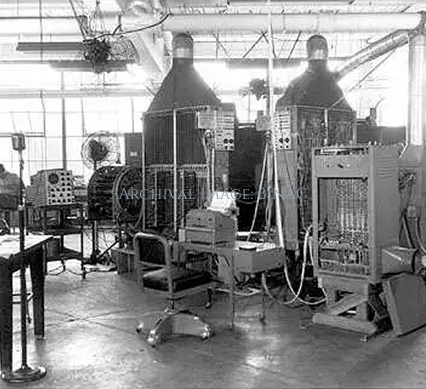
“The machine that predicted the future.”
The Universal Automatic Computer (UNIVAC) was the first commercial computer produced in the US. It became famous for correctly predicting the 1952 presidential election landslide, contrary to human pollsters.
It marked the moment the public began to understand the power of electronic computing, transitioning from scientific instrument to business necessity.
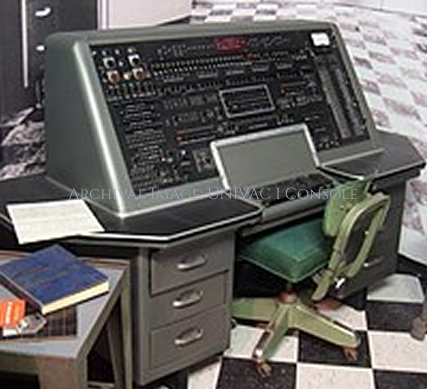
“Britain's commercial pioneer.”
Based on the Manchester Mark I, the Ferranti Mark I was the world's first commercially available general-purpose electronic computer. It was delivered to the University of Manchester in February 1951.
It was heavily used for scientific calculations, including genetic research and meteorological forecasting.
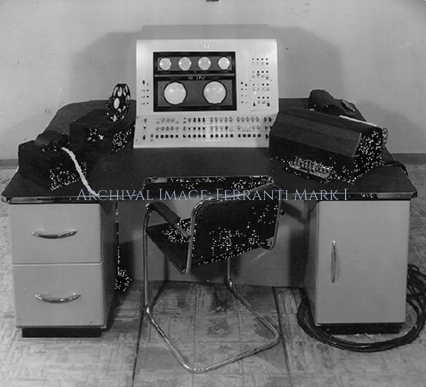
“The Defense Calculator.”
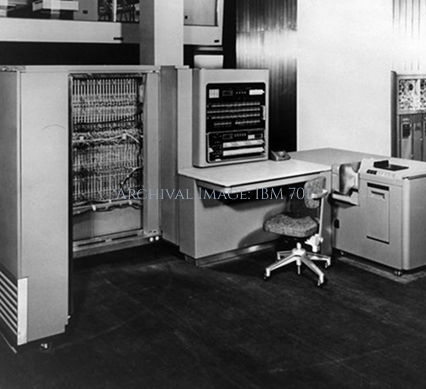
The IBM 701 was IBM's first commercial scientific computer. Announced in 1952, it was designed primarily for government and defense agencies for complex calculations.
It marked the beginning of IBM's dominance in the large-scale mainframe computer market, setting a standard for reliability and service.
“Computing at the speed of life.”
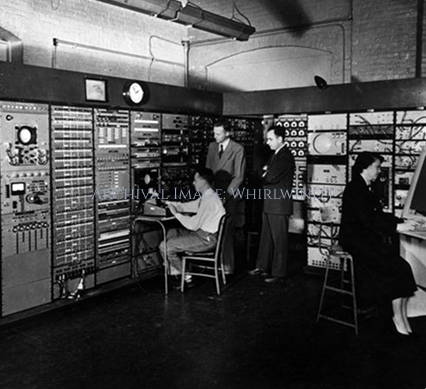
Developed at MIT for the US Navy, Whirlwind was the first computer that operated in real-time, using a video display for output.
It was also the first computer to use magnetic core memory, a breakthrough that became the standard for computer RAM for two decades.
“The Model T of computing.”
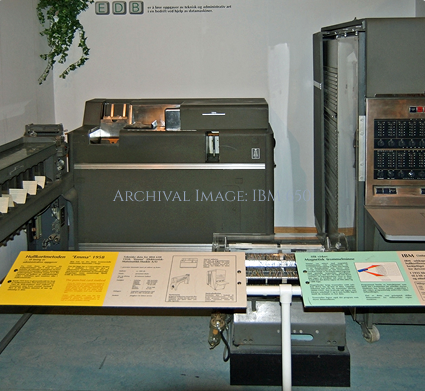
The IBM 650 Magnetic Drum Data-Processing Machine was the world's first mass-produced computer. Nearly 2,000 units were produced, bringing computing to universities and businesses everywhere.
Its reliability and relatively lower cost democratized access to electronic calculation, training the first generation of professional programmers.
From machine code to the first high-level languages. Explore how we learned to speak to the machines we build.
Explore Next Era →