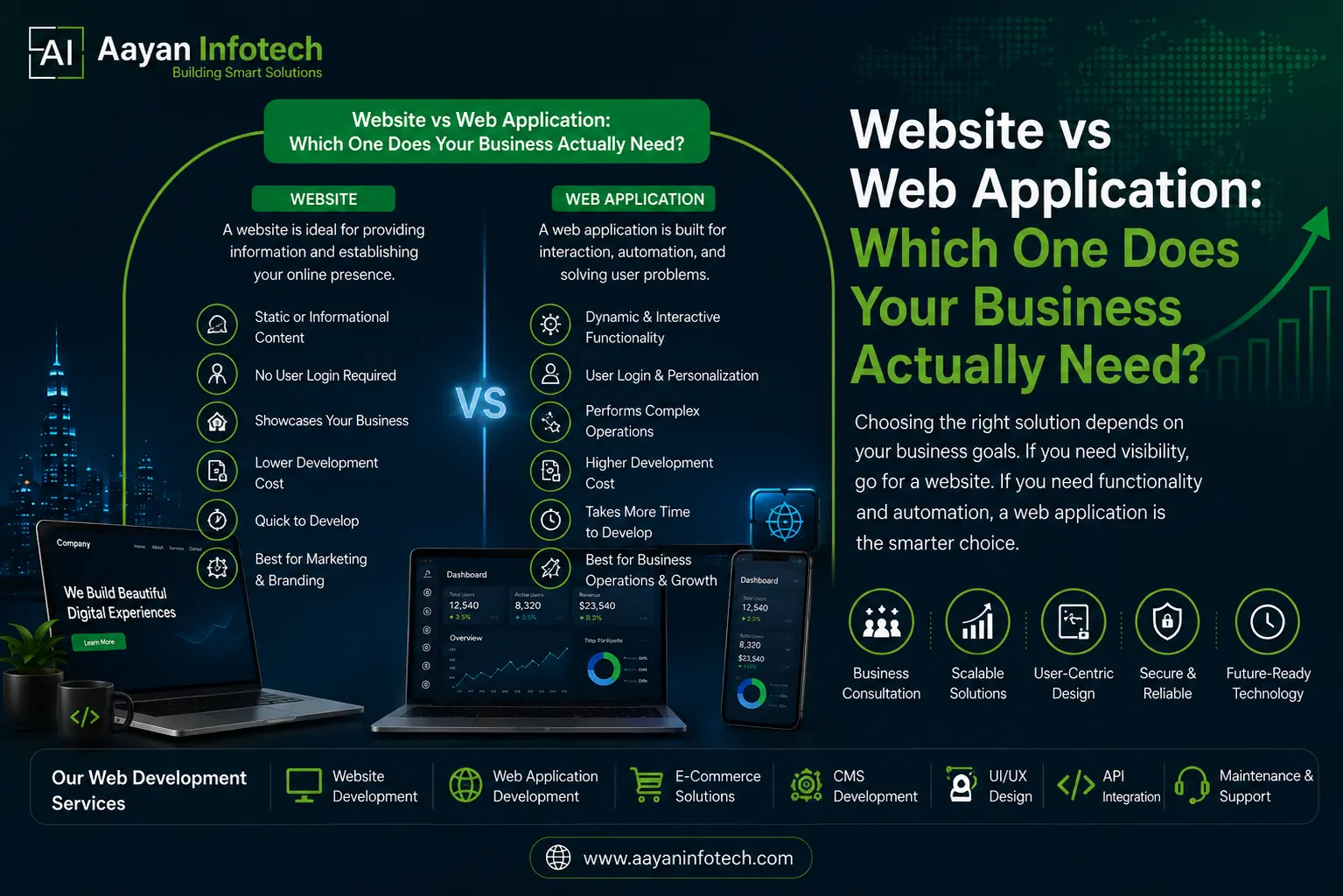
Choosing the right digital platform can have a major impact on how your business attracts customers, manages operations, and grows online. The Website vs Web Application decision is not simply about design or technology. It depends on what you want your digital platform to achieve.
A business website is usually designed to provide information, build credibility, generate leads, and help customers discover your products or services. A web application, on the other hand, provides interactive features that allow users to log in, manage information, make transactions, collaborate, or complete specific tasks.
For businesses worldwide, understanding the difference between website and web application can help you invest in the right technology instead of paying for unnecessary features. This guide explains the key differences, costs, benefits, SEO considerations, and practical situations where a website or web application makes more sense.
The simplest way to understand website vs web application is to look at the primary purpose of each platform.
A website mainly communicates information to visitors. It may include service pages, product pages, blogs, contact forms, testimonials, portfolios, and other content. A responsive website is particularly important because users access websites from smartphones, tablets, laptops, and desktops.
A web application is more interactive. Users may create accounts, log in, upload information, communicate with other users, manage dashboards, process payments, or access personalized services.
For example, a company website may explain its services and encourage visitors to request a quote. A customer portal could allow those customers to log in, view orders, download invoices, submit requests, and communicate with the company.
This is why the web application vs website decision should begin with your business requirements rather than technology preferences.
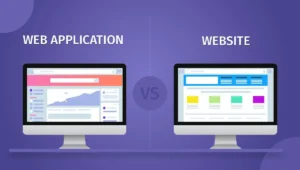
When comparing a website vs web application for business, consider what you expect visitors to do after reaching your platform.
A business website is usually suitable when your primary objectives are:
A web application becomes more useful when users need to perform actions rather than simply consume information.
For example, businesses may need a web application for:
The right choice depends on your users, workflows, data, security requirements, and long-term growth plans.
A business website acts as your company’s digital storefront. It gives potential customers information about your brand and makes it easier for them to contact you.
A professional website may include:
Website development also plays an important role in search engine optimization. A technically sound website can provide a strong foundation for content marketing, local SEO, paid campaigns, and organic search visibility.
Aayan Infotech provides website development services covering front-end and back-end development, UI/UX design, eCommerce, CMS solutions, and custom web applications.
Explore Aayan Infotech Website Development Services
A web application is software that users access through a web browser. Unlike a traditional informational website, it is designed around interaction and functionality.
A typical web application can include:
A custom web application is particularly useful when standard website platforms cannot support your business process.
For example, a logistics company might require a platform where customers can create shipments, track deliveries, download documents, and receive notifications. A normal website could explain the logistics service, but a web application could actually operate the customer-facing workflow.
Aayan Infotech also provides custom software development focused on scalable, secure, and business-specific solutions across the development lifecycle.
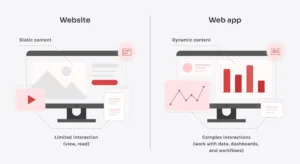
The major difference is functionality.
A website primarily focuses on information and communication, while a web application focuses on interaction and business processes.
A website generally has a simpler user journey. Visitors arrive through search engines, advertisements, social media, referrals, or direct traffic and browse content before contacting the company or making a purchase.
A web application generally has a more complex user journey. Users may register, authenticate themselves, interact with databases, perform transactions, and return regularly to complete tasks.
This also affects development requirements. Website development may require content management, responsive design, SEO, analytics, security, and performance optimization. Web application development usually requires additional backend architecture, databases, authentication, APIs, testing, security controls, and ongoing maintenance.
There is no universal answer to which is a better website or web application.
A website is usually the better choice if your primary goal is visibility and lead generation. For example, a consulting company, restaurant, law firm, construction company, healthcare provider, or professional service business may primarily need a strong website.
A web application is more suitable when customers or employees need to interact with a system.
A startup creating a SaaS product, for example, may need a web application from the beginning because its product itself operates online.
Some businesses need both.
A company can use a website to attract visitors through SEO and digital marketing while using a secure web application for customer accounts, subscriptions, orders, or internal operations.
You may need a business web application when your business depends on digital workflows.
Ask yourself whether customers need to log in, whether different users need different permissions, whether information must be stored in a database, or whether repetitive business processes could be automated.
If the answer is yes to several of these questions, web application development may be worth considering.
For example, an online education company could have a marketing website where students learn about courses. After registration, students could access a web application containing lessons, assignments, progress tracking, certificates, and payments.
This approach separates marketing from functionality while allowing both systems to work together.
For a small business, a website is often the best starting point.
A small business may not need a complicated platform immediately. A fast, mobile-friendly website with strong service pages, contact options, reviews, location information, and useful content can generate meaningful business results.
However, a small business may eventually need a web application as operations become more complex.
For example, a growing service company might initially manage appointments through phone calls and forms. As the customer base increases, it could introduce an online booking system, customer accounts, automated reminders, invoices, and staff dashboards.
Starting with a website does not prevent a company from adding application functionality later.
The cost of website vs web application varies considerably because both can range from simple to highly complex.
A basic business website generally requires fewer development resources than a sophisticated web application. A web application may require custom backend development, database architecture, API integrations, authentication, security testing, user roles, and ongoing maintenance.
Instead of choosing technology based only on initial price, consider the long-term business value.
A low-cost website may be sufficient if your objective is generating leads. A more expensive web application may provide a better return if it automates repetitive work or becomes the core of your business model.
Aayan Infotech notes that website costs vary according to features, complexity, and design requirements, with development solutions available for businesses of different sizes.
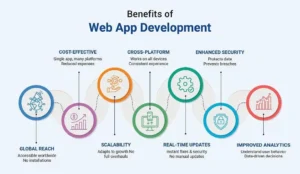
The benefits of web applications for businesses go beyond customer convenience.
A well-designed application can help businesses automate repetitive processes, centralize information, improve communication, and create personalized user experiences.
Web applications can also support business scalability. Instead of manually processing every request, an automated platform can handle many routine tasks digitally.
For example, an application can automatically:
This can reduce administrative work and allow employees to focus on higher-value activities.
SEO requirements differ between a website and a web application.
A business website usually contains pages specifically designed to rank in search engines. These pages should have clear headings, descriptive metadata, useful content, internal links, optimized images, fast loading times, and mobile-friendly layouts.
A web application may contain areas that should not be indexed, such as private dashboards and account pages. SEO strategy should therefore distinguish between public marketing pages and authenticated application areas.
Core Web Vitals should also be considered for both. Google identifies Largest Contentful Paint, Interaction to Next Paint, and Cumulative Layout Shift as important real-world user experience metrics. Google recommends aiming for good Core Web Vitals to support a strong page experience.
Images should use descriptive alt text where appropriate, JavaScript should be optimized, unnecessary scripts should be reduced, and mobile performance should be tested regularly.
When deciding how to choose between a website and web application, start with business goals rather than features.
Choose a website when you mainly need to:
Consider a web application when you need to:
If you need both marketing and advanced functionality, a hybrid approach may be the most practical solution.
The Website vs Web Application decision should always begin with your business objectives.
A professional website can provide the foundation for online visibility, SEO, lead generation, and brand credibility. A web application can take your digital presence further by providing interactive functionality, automation, personalized experiences, and data-driven workflows.
For many businesses, the best strategy is not choosing one permanently. You can start with a responsive business website and introduce a custom web application when your customers or internal teams require more advanced functionality.
Aayan Infotech helps businesses develop digital solutions tailored to their goals, including website development, custom software development, mobile applications, and other technology services.
Contact Aayan Infotech for Your Web Development Project
Whether you are launching a startup, expanding an established company, or building a SaaS product, choosing the right platform early can help you control costs, improve user experience, and create a scalable digital foundation.