
Hybrid app development is the process of creating mobile applications with a single codebase that works well on both Android and iOS. These apps use web technologies like HTML, CSS, and JavaScript, then are packaged in a native container. This method makes hybrid app development faster and more cost-effective. It’s a great option for businesses that want to reach a larger audience without spending too much on separate apps for each platform.
In India, the cost to develop a hybrid app usually ranges from ₹2,50,000 to ₹25,00,000. This varies based on features, complexity, design, and technical needs. India is a popular choice for app development because of its reasonable pricing, access to skilled developers, and quicker delivery times.
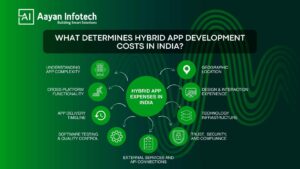
Basic apps with basic screens are cheaper, whereas complex ones that include chat functions, payment, GPS, and personal dashboards are more expensive to develop and, consequently, need a bigger budget.
Hybrid apps are designed for both Android and iOS, but optimizing the app to run smoothly across different screen sizes, devices, and OS versions can influence total App Development Costs.
The presence of such features as payment gates, push notifications, social media authorizations, CRM systems, and Google Maps costs specific to develop based on the complexity of integration.
UX design is quite a significant expense factor. Clean and contemporary easy to use interface needs professional designers and additional man hours which directly affects cost.
A high level of security and the standards of requirements such as GDPR or PCI-DSS are in place in apps that deal with high-sensitive data, such as financial, health, or personal, and add cost to the project.
The selection of Frameworks (Flutter, React Native, Ionic or Xamarin) may influence the final budget. Certain technologies have to be optimised and tested more.
Hiring an Indian app development firm costs significantly less compared to US, UK, or Australia, making India a preferred outsourcing destination.
Urgent or fast-track app deliveries demand additional resources, increasing overall Hybrid App Development cost.
The extensive tests, like manual, automated tests, device testing, and performance testing, are used to ensure the app is free of bugs but increase the cost of the project.
It covers the work of the backend development, the front end development, the creation of APIs, the creation of core features and the implementation of the business logic.
Design costs include wireframes, visual design, prototyping and user testing.
Quality assurance provides seamless functionality, safety and ease of use in all gadgets and platforms.
Additional costs involved after the launching will include publishing the app on the Play Store and App Store, constant updating, bug rectification, and monitoring of the performance of the app.
The SMS gateways, email services, hosting, and premium libraries as well as third-party tools are all extras based on the app requirements.
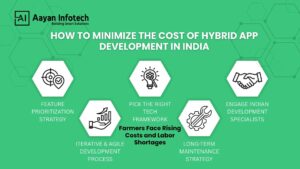
Begin with the features that are an absolute must, create a minimum viable product and develop it further. This helps control App Development Costs and speeds up time-to-market.
It is possible to choose the most suitable hybrid framework such as Flutter or React Native to ensure a shorter development time and higher app performance.
Having experienced Indian developers would mean quality growth at low price without affecting the performance.
Agile development makes the project flexible, less rework is created and time and money are used effectively.
Planning to upgrade on schedule, enhance performance, apply security patches and scale when you see the growth in the number of people using your services.
Hybrid app development is one of the most efficient ways for businesses to build cost-effective, high-performance mobile apps. With India offering skilled developers, competitive pricing, and cutting-edge technology, companies can achieve high-quality results while optimising Hybrid App Development expenses. By carefully planning features, selecting the right tech stack, and following an agile approach, businesses can significantly reduce the cost to develop a hybrid app in India. Contact us today at +91 7007120194 or email us at info@aayaninfotech.com.
Typically 2–6 months, depending on features and complexity.
Flutter and React Native are the most popular due to performance, flexibility, and community support.
Yes. Since hybrid apps use a single codebase, development time and cost are much lower.
With the right backend and optimization, hybrid apps can scale efficiently to supp