
As businesses continue shifting toward digital-first experiences, having a clear and strategic Custom Mobile App development roadmap is essential for building apps that truly deliver value. Competition will become even fiercer in 2025 when businesses will require order planning, specification of the objectives, and smart implementation in order to remain competitive. An effective roadmap also enables a team to remain on track, minimize development blockers, and introduce into the market applications that are dependable and embraced by customers.
This guide is a list of everything you should know: how to define your product vision or how to choose the correct Custom Mobile App features, schedule and roadmap architecture.
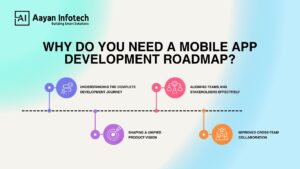
A Custom Mobile App development roadmap acts as your strategic blueprint. It maintains the team on track, focuses the purpose of the app, establishes expectations and ensures everyone works flawlessly in design, development, testing and deployment.
A strong roadmap helps you:
In 2025, user expectations are higher, so a roadmap helps teams stay organized and deliver high-performance apps that stand out.
Start with why your app exists. Define the core purpose, long-term goals, and the problem it solves. This vision helps teams make consistent decisions and stay focused during development.
Key questions to ask:
Your roadmap must include clear KPIs. Measurable goals help track progress and evaluate the app’s performance.
Examples include:
Understanding the target audience influences every decision—from design and features to marketing and monetization.
Consider:
Conduct surveys, analyse competitors, and create detailed personas to bring clarity to your audience.
Not all features are equally important. Use prioritisation frameworks like:
This ensures you focus on features that deliver maximum value during the first release.
Timeline planning allows teams to deliver the project in manageable stages. Create realistic timelines for:
In 2025, teams rely on modern roadmap tools to visualize progress and stay organized.
Top tools include:
Clear, trackable goals help evaluate success and guide future improvements.
A roadmap should consist of deadlines, development cycles, and realistic schedules to prevent delays.
A well-defined list of essential features ensures that the app launches with the right functionalities and evolves efficiently over time.
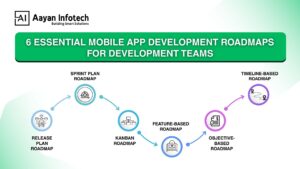
Different businesses and teams prefer different types of roadmaps. Here are the most popular formats for 2025:
Helps teams plan upcoming versions, updates, and feature releases.
Ideal for Agile teams working in weekly or bi-weekly sprints.
Visual structure that focuses on the workflow—from “To Do” to “Completed.”
Highlights feature priorities for future releases.
Organized around business goals, not just features.
Shows the entire development lifecycle in a visually structured timeline.
To ensure your roadmap drives success, focus on:
A strong Custom Mobile App development roadmap is crucial for launching successful, scalable, and user-focused applications in 2025. Since the definition of your product vision till the choice of the appropriate features, types of tools and types of roadmap, all these steps are crucial to the success of the app. Strategically planned and quickly adapting businesses will be on top of the competition offering strong digital experiences.
The company is characterized by highly experienced employees, tailor-made solutions, and a clear development-cycle of Aayan Infotech. We provide services end-to-end-ideation to maintenance-based on the latest technologies, scalable backends, and easy to use designs. With experience across platforms and industries, we focus on delivering Custom Mobile Apps that are not just functional but also business-driven and future-ready. Contact us today at +91 7007120194 or email us at info@aayaninfotech.com.
A Custom Mobile App development roadmap is a strategic plan that outlines the vision, goals, key features, timelines, and development stages of a Custom Mobile Application.
It helps teams stay aligned, prioritize features, track progress, and ensure timely delivery of a high-quality app.
Goals, features, timelines, user requirements, technical specifications, and release plans.
Using frameworks like MoSCoW, Kano Model, or an impact–effort matrix.
Typically 3–9 months, depending on complexity, design, features, and team size.
Jira, Notion, Trello, Monday.com, and Productboard are widely used due to their collaboration features.
A release roadmap focuses on future versions, while a sprint roadmap details tasks for short development cycles.
It helps identify user needs, which leads to better feature decisions and improved user satisfaction.
Yes. It must stay flexible to adapt to user feedback, market changes, and new trends.
The company is characterised by highly experienced employees, tailor-made solutions, and a clear development cycle of Aayan Infotech. Contact us today at +91 7007120194 or email us at info@aayaninfotech.com.