The demand for convenient home repair and maintenance services continues to grow as customers look for faster ways to book trusted professionals. From plumbing and electrical work to carpentry, painting, appliance repair, and general home maintenance, customers increasingly expect simple digital booking experiences.
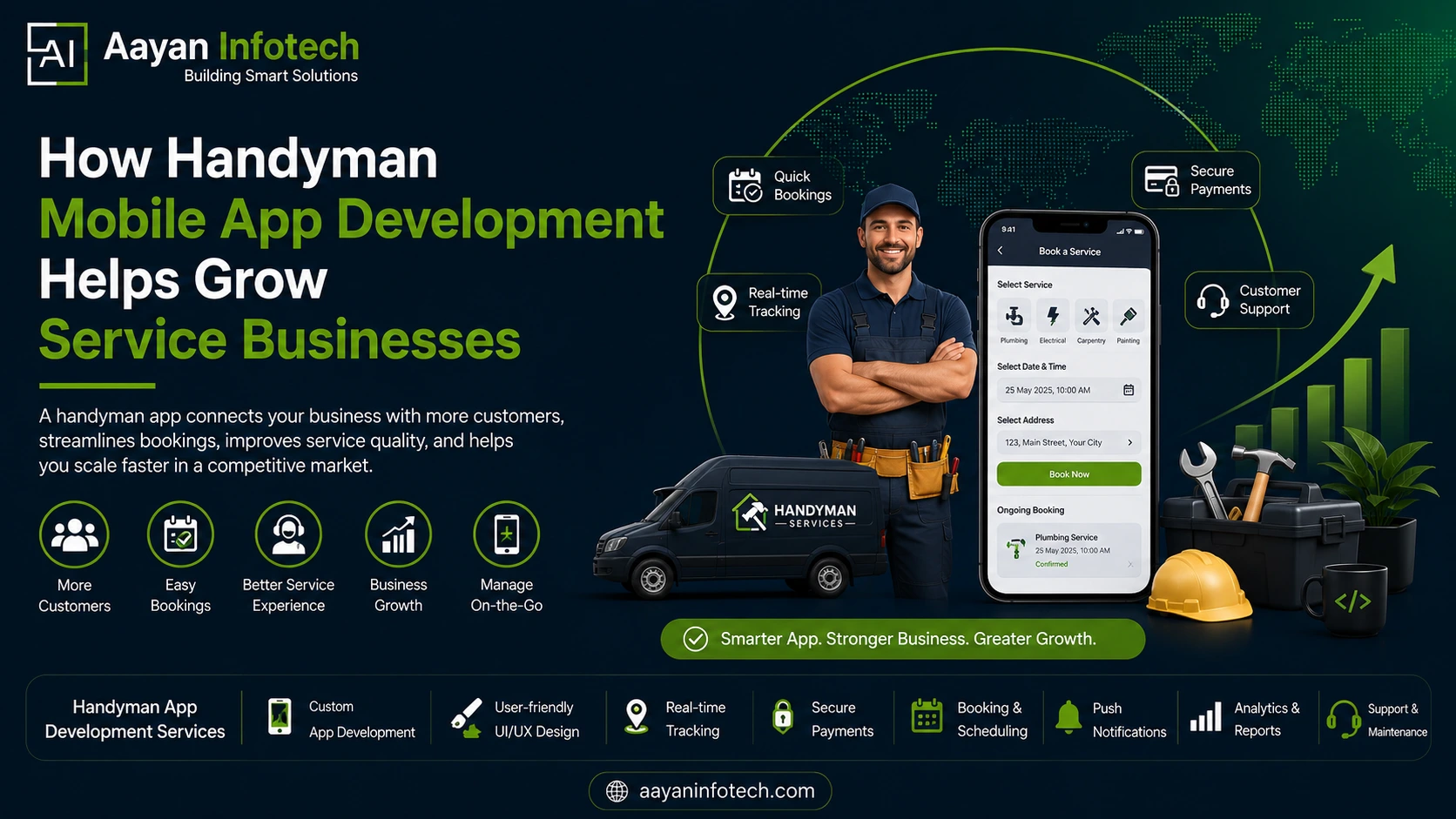
Handyman Mobile App Development helps service businesses bring these expectations together in one convenient platform. A dedicated mobile app can connect customers with service professionals, simplify appointment scheduling, support online payments, manage jobs, and provide real-time updates.
For handyman companies operating in competitive markets such as the USA, UK, Australia, India, Dubai, and other major service locations, mobile technology can become an important part of business growth.
A well-designed handyman app does more than accept bookings. It can improve customer satisfaction, increase operational efficiency, strengthen brand visibility, and create new revenue opportunities.
Handyman Mobile App Development refers to creating a mobile application that allows customers to discover, compare, book, and pay for home repair and maintenance services through smartphones.
A typical handyman service platform includes three major components:
Customers can search for services, choose professionals, schedule appointments, make payments, and provide reviews. Handymen can manage job requests, availability, routes, earnings, and customer communication.
The admin panel gives the business owner centralized control over users, bookings, payments, services, providers, promotions, and reports.
This structure makes an on-demand handyman app useful for both small local businesses and larger service marketplaces.
A traditional handyman business may depend heavily on phone calls, referrals, flyers, or local advertising. A mobile application provides another digital channel through which customers can discover and book services.
With location-based search, customers can find professionals available in their area. Businesses can also organize services according to cities, neighborhoods, service categories, or coverage zones.
For example, a company targeting customers in New York, Los Angeles, Dubai, London, Melbourne, Toronto, or major Indian cities can structure its platform around specific service areas.
This creates opportunities for local businesses to expand while maintaining control over their service territories.
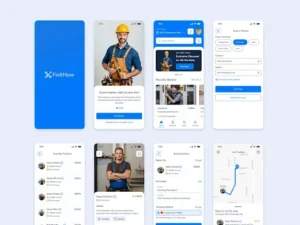
Customers do not always want to call a service company to ask about availability. They often prefer selecting a service, choosing a suitable time, and receiving confirmation immediately.
A handyman booking app can provide:
Reducing unnecessary communication can make the customer journey faster and more convenient.
Customer experience can strongly influence repeat bookings and online reviews.
A well-designed handyman app gives customers greater visibility throughout the service process. They can see booking information, professional details, estimated arrival information, payment status, and service history from one location.
Features such as push notifications and real-time status updates can further improve communication.
A simple interface is particularly important because customers may need to book urgent services while dealing with problems such as plumbing leaks, electrical failures, broken appliances, or damaged fixtures.
A mobile application can create additional opportunities to generate revenue.
Businesses can offer multiple services through the same platform, such as:
Businesses can also introduce service packages, membership plans, priority bookings, seasonal promotions, and additional services.
For example, a customer booking plumbing repair could also receive an appropriate offer for routine maintenance. These relevant recommendations can increase the value of individual bookings without making the customer journey complicated.
The customer application should focus on convenience and transparency.
Important features can include:
These features help create a complete digital service-booking experience.
Service professionals need tools that help them manage jobs efficiently.
A provider application can include:
These tools can reduce administrative work and help professionals manage more appointments.
The admin dashboard acts as the control center for the entire platform.
Business owners can manage:
A centralized dashboard also makes it easier to identify operational problems and understand business performance.
Manual booking processes can create scheduling conflicts and unnecessary administrative work. A digital platform can automate many routine activities.
Bookings, notifications, payments, provider assignments, and service updates can be managed through integrated workflows.
This allows business teams to focus more on service quality and customer relationships.
A convenient booking experience can encourage customers to return when they need another service.
Businesses can use customer history to understand previous bookings and provide relevant service recommendations.
Loyalty programs, membership plans, personalized offers, and service reminders can further support retention.
A branded mobile application gives a service business its own digital customer channel.
Instead of relying entirely on third-party marketplaces, businesses can build direct relationships with customers through their own platform.
The app can also support marketing campaigns through push notifications, promotional offers, and referral programs.
A handyman management app can collect useful operational data.
Businesses can analyze:
These insights can help management make better decisions about pricing, staffing, marketing, and service expansion.
Customers often compare service providers based on availability, pricing, reviews, convenience, and trust.
A professional handyman app can bring these elements together.
Customers can view provider information, compare services, select appointment times, and make secure payments without switching between multiple platforms.
Businesses can also differentiate themselves through faster responses, transparent pricing, verified professionals, service guarantees, and better after-service support.
There are several potential monetization models for handyman platforms.
The business can charge a percentage of each completed service booking.
Customers or professionals can pay recurring fees for premium benefits.
A platform can apply a booking or convenience fee to selected transactions.
Handymen can pay for increased visibility within relevant service categories, provided the model remains transparent.
Businesses can offer priority appointments, emergency services, extended support, or specialized service packages.
The right model depends on the target market, business structure, competition, and customer expectations.
The technology stack depends on the app’s requirements and expected scale.
Cross-platform frameworks such as Flutter and React Native can help businesses develop applications for multiple platforms while maintaining a shared development approach.
A complete solution may also require:
Aayan Infotech provides custom mobile application development using Flutter, React Native, and native technologies for different business requirements. Its mobile app development services cover end-to-end development for startups and enterprises.
For businesses evaluating cross-platform development, Aayan Infotech also provides information about its React Native and Flutter development capabilities.
The cost of Handyman Mobile App Development depends on the complexity of the platform.
Major cost factors include:
An MVP can help businesses launch essential features first and expand the platform after collecting customer feedback.
Using cross-platform technologies such as Flutter or React Native may also be considered when a business wants applications for both iOS and Android.
Start by deciding whether the application will serve your own handyman company or operate as a multi-provider marketplace.
Identify customer needs, competitor services, pricing, locations, and popular service categories.
Separate essential MVP features from advanced functionality that can be introduced later.
Create simple interfaces for customers, service professionals, and administrators.
Build the mobile applications, backend infrastructure, APIs, database, and admin panel.
Implement secure payment processing and location functionality where required.
Test performance, security, usability, compatibility, booking workflows, notifications, and payment processes.
After launch, monitor customer feedback, app performance, bookings, reviews, and technical issues.
Regular updates can improve performance, introduce new features, strengthen security, and support changing customer expectations.
Mobile app development should work alongside a strong local SEO strategy.
Businesses targeting local customers should optimize their website and Google Business Profile around relevant service and location terms.
Examples include:
A business should only target locations where it genuinely provides services.
Google Business Profile allows businesses to manage information shown on Google Search and Maps, including business details, photos, and customer reviews.
For service businesses with eligible physical locations, relevant structured data can also help Google understand business information. Google provides official documentation for Local Business structured data.
Choosing the right technology partner is important because a handyman platform must support customers, service professionals, administrators, payments, scheduling, and future business growth.
Aayan Infotech provides custom mobile application development services covering MVPs and full-scale applications. Its published services include Flutter, React Native, Android, and iOS development.
The development process can be tailored to the business model, target market, required features, and long-term scalability goals.
For businesses planning a handyman booking platform, the first step should be defining the services, target locations, user types, and essential MVP features.
Handyman Mobile App Development can help service businesses move from traditional booking processes toward a more convenient, scalable, and data-driven service model.
A well-planned handyman application can simplify bookings, improve customer experience, support service professionals, automate business operations, increase repeat business, and create new revenue opportunities.
However, successful app development requires more than simply building mobile screens. Businesses need a clear business model, intuitive UX, secure technology, local SEO, fast website performance, strong trust signals, and continuous optimization.
If you are planning to launch a handyman booking platform or transform an existing service business into a digital marketplace, Aayan Infotech can help turn your idea into a scalable mobile application. Explore its mobile app development services and connect with the development team to discuss your requirements.